Skip to content

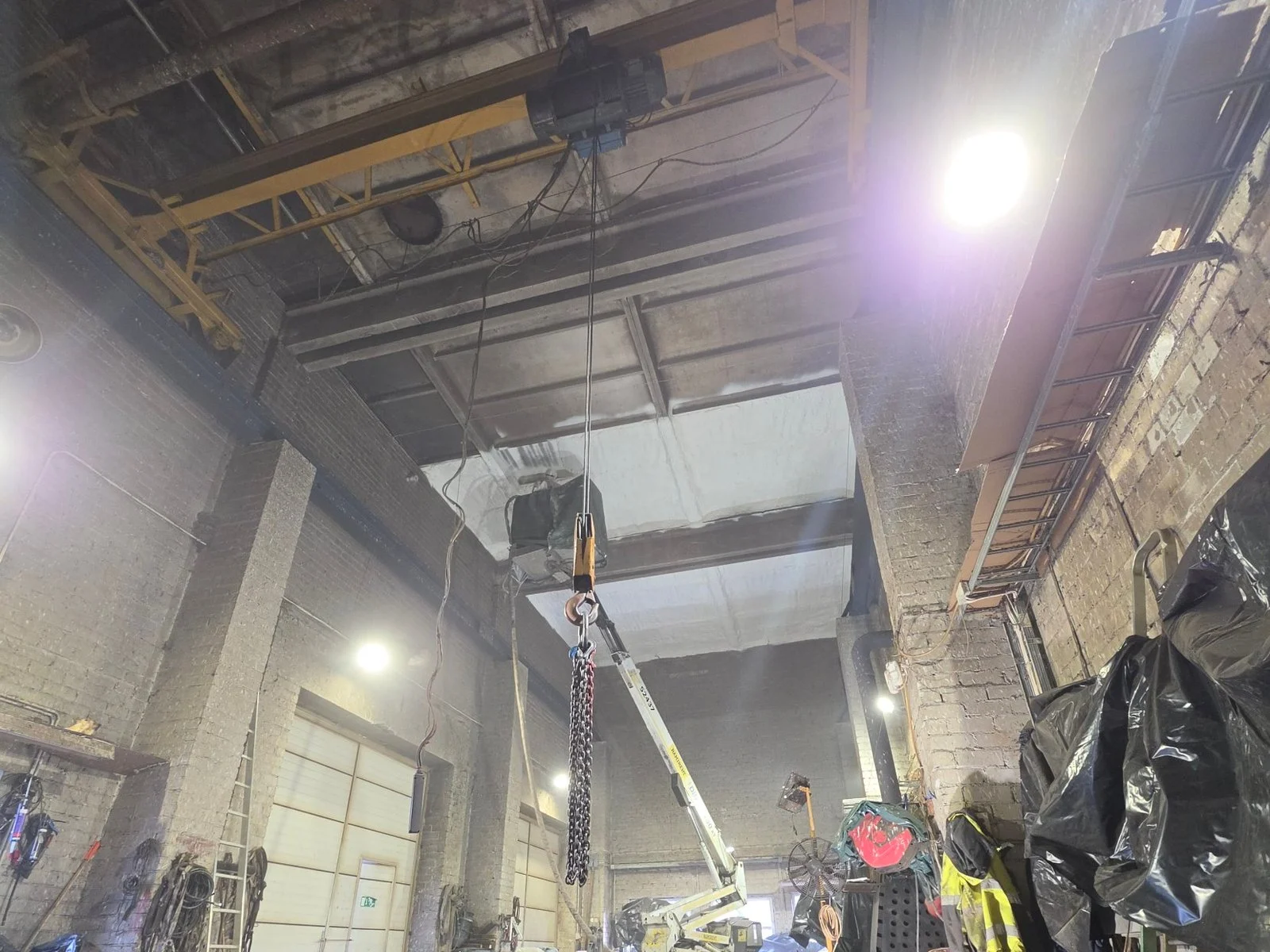
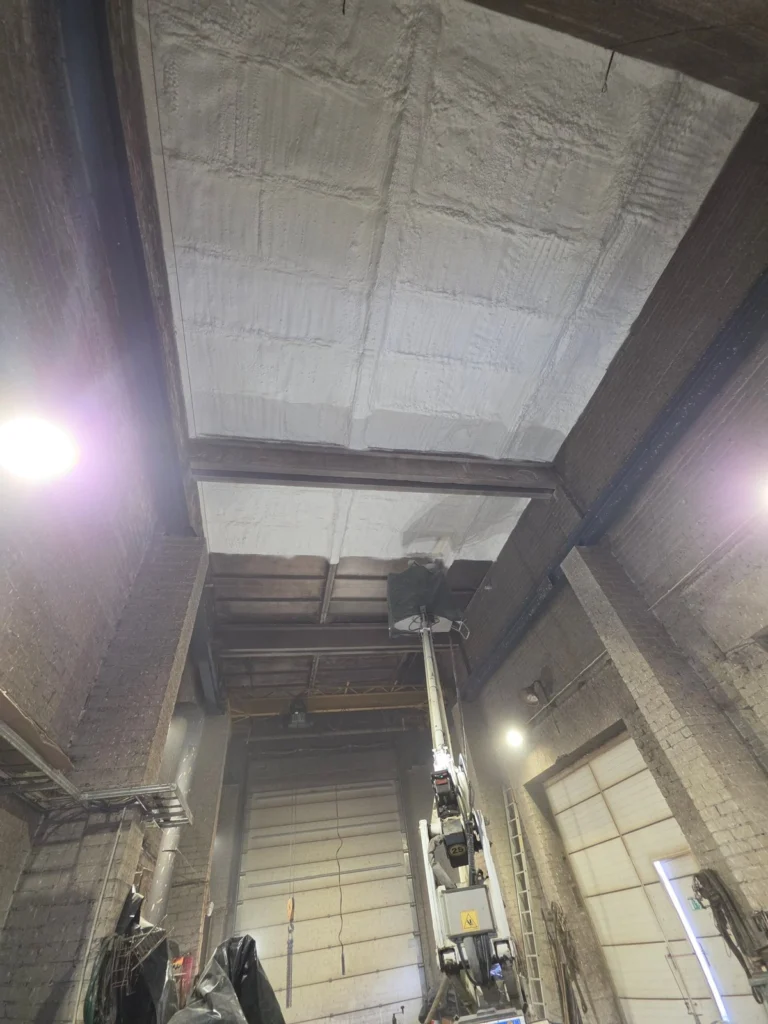
In Lääne County we insulated the ceiling of a workshop that services the machinery of a peat bog. After a consultation, the client chose a 150 mm layer of open-cell PUR foam, H2Foam Lite+, which we sprayed onto the ceiling from the inside.
Client's concern
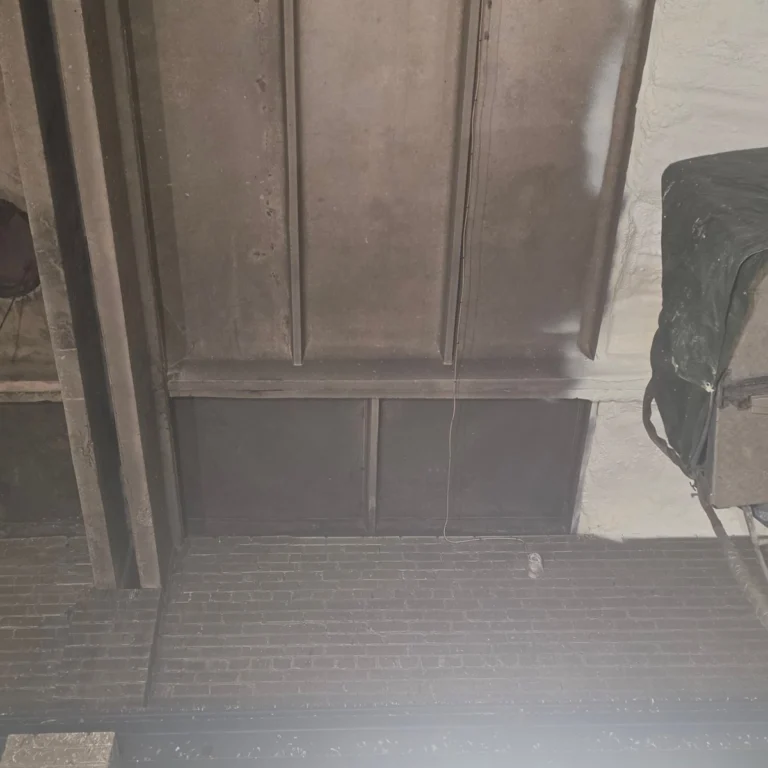
The workshop ceiling was letting heat escape. The biggest leaks were at the joints between the wall tops and the ceiling, where light shone straight through. In winter the roof melted almost completely clear of snow. This showed how large the heat loss was.
Heating the high-ceilinged building took an average of 1 m³ of firewood per day.
How the ceiling insulation was done
The ceiling is high, so we sprayed the foam from a boom lift. The workshop equipment was covered with plastic sheeting before work.
Sprayed foam bonds to the surface and fills cracks and joints. The 150 mm foam layer covered the whole ceiling and also sealed the joints between the wall tops and the ceiling, where light used to shine through. A continuous layer without joints stops the air movement through which warm air used to escape.
What the insulation achieves
Warm air rises, so in a high-ceilinged building much of the heat is lost through the ceiling. When the ceiling and its joints are airtight, the heat stays in the workshop. After insulation, firewood use is expected to be only a fraction of what it was.
Why H2Foam Lite+
- Canadian open-cell PUR foam, thermal conductivity 0.036 W/mK.
- The thermal resistance of a 150 mm foam layer is R 4.17 m²K/W.
- The foam has integrated wind barrier properties. It stops air moving through the ceiling and joints.
- The foam bonds to practically all building materials and fills cracks and uneven surfaces.
Briefly
- Project: peat bog machinery workshop, Lääne County
- Insulated: ceiling from the inside, including the joints at the wall tops
- Material: H2Foam Lite+, open-cell PUR foam
- Layer thickness: 150 mm
- Heating use before insulation: on average 1 m³ of firewood per day
- Price: based only on the amount of foam installed
- Warranty: 25-year manufacturer's warranty
Is your workshop, warehouse or production building losing heat? Read more about insulating industrial buildings and hangars and roof and loft insulation or see what makes up the PUR foam price. Send us the area and layer thickness and we will prepare a personal quote for you. If you do not know the thickness, we will recommend a suitable one. We work all over Estonia, including Lääne County.
We are an official licensed Huntsman installer and the first importer in Estonia, have insulated over 6,500 buildings since 2013 and hold the Huntsman Level 2 (Advanced) installation certificate.