 Skip to content

Insulating the foundation and plinth with PUR foam
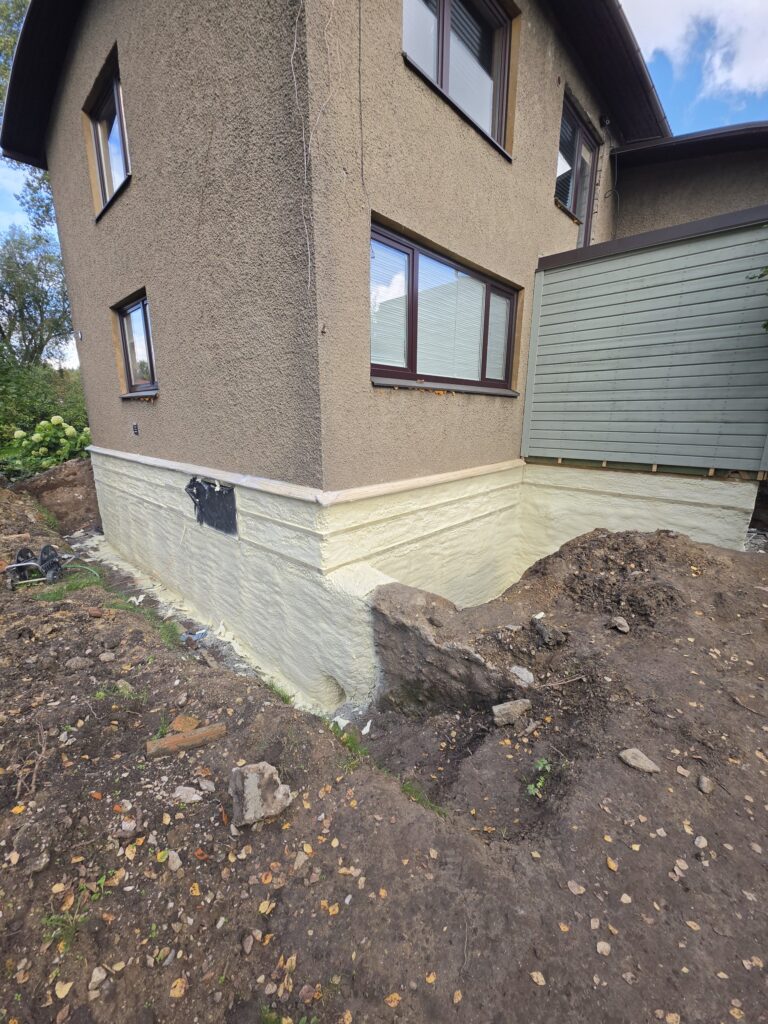
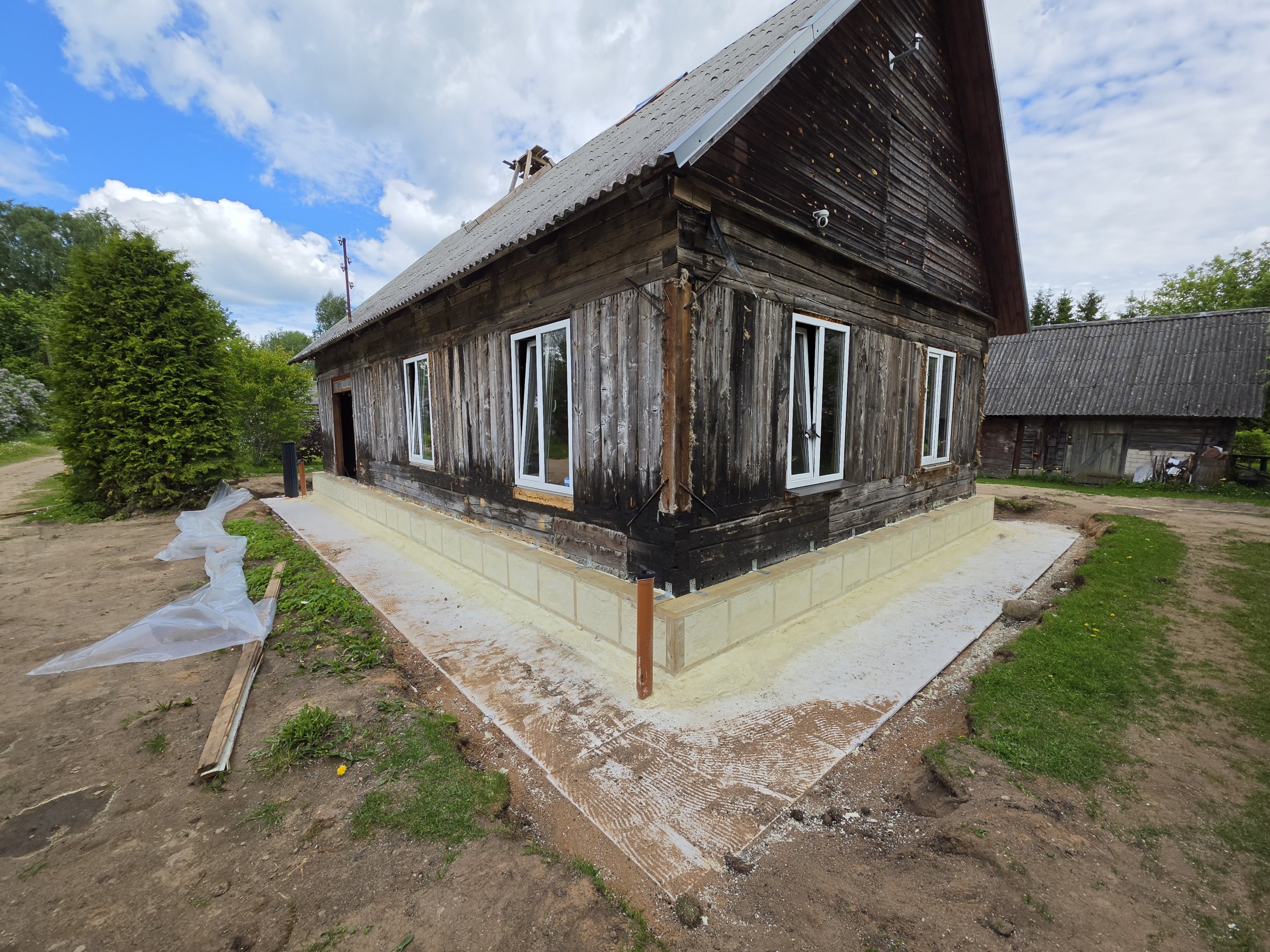
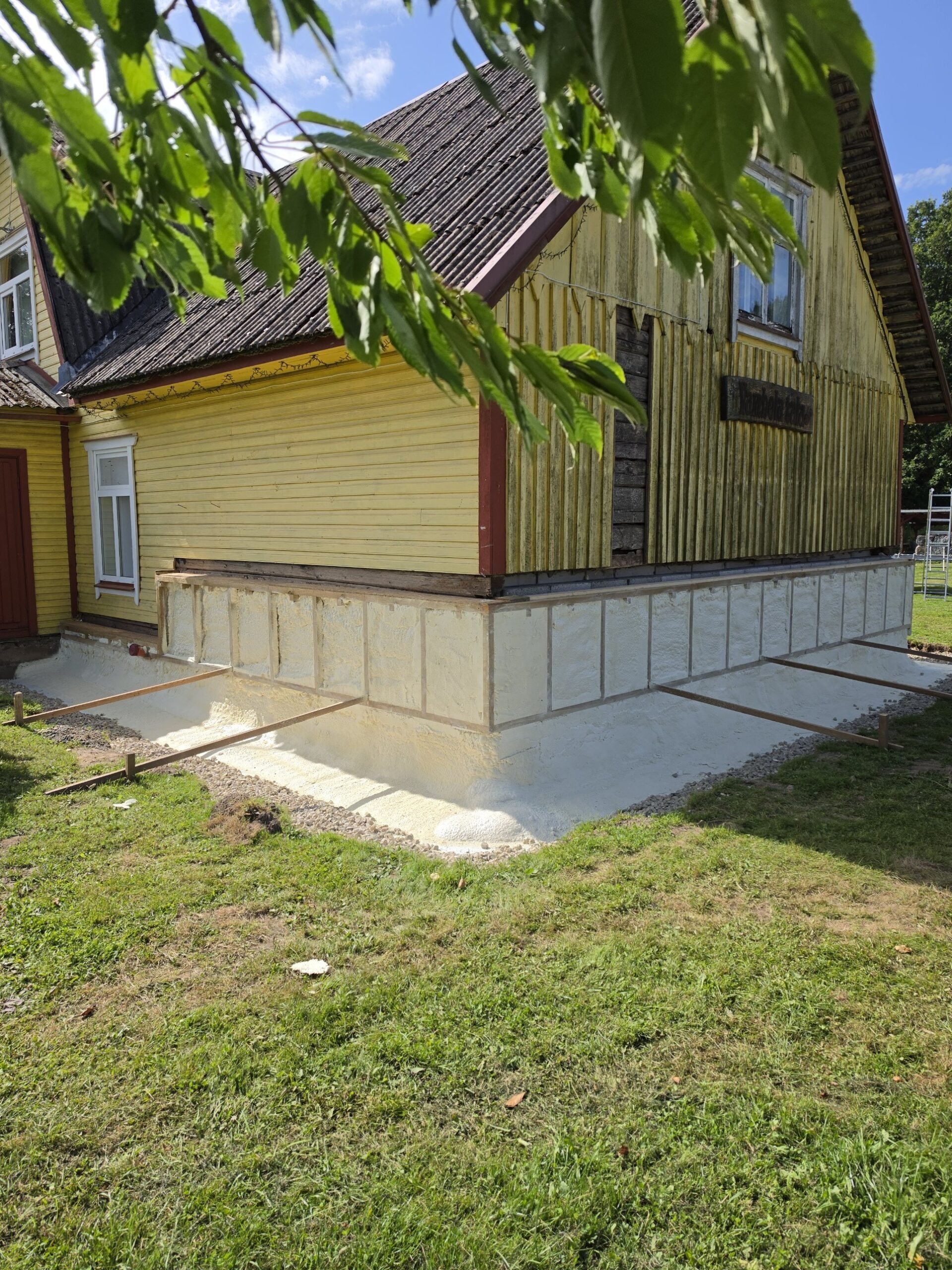
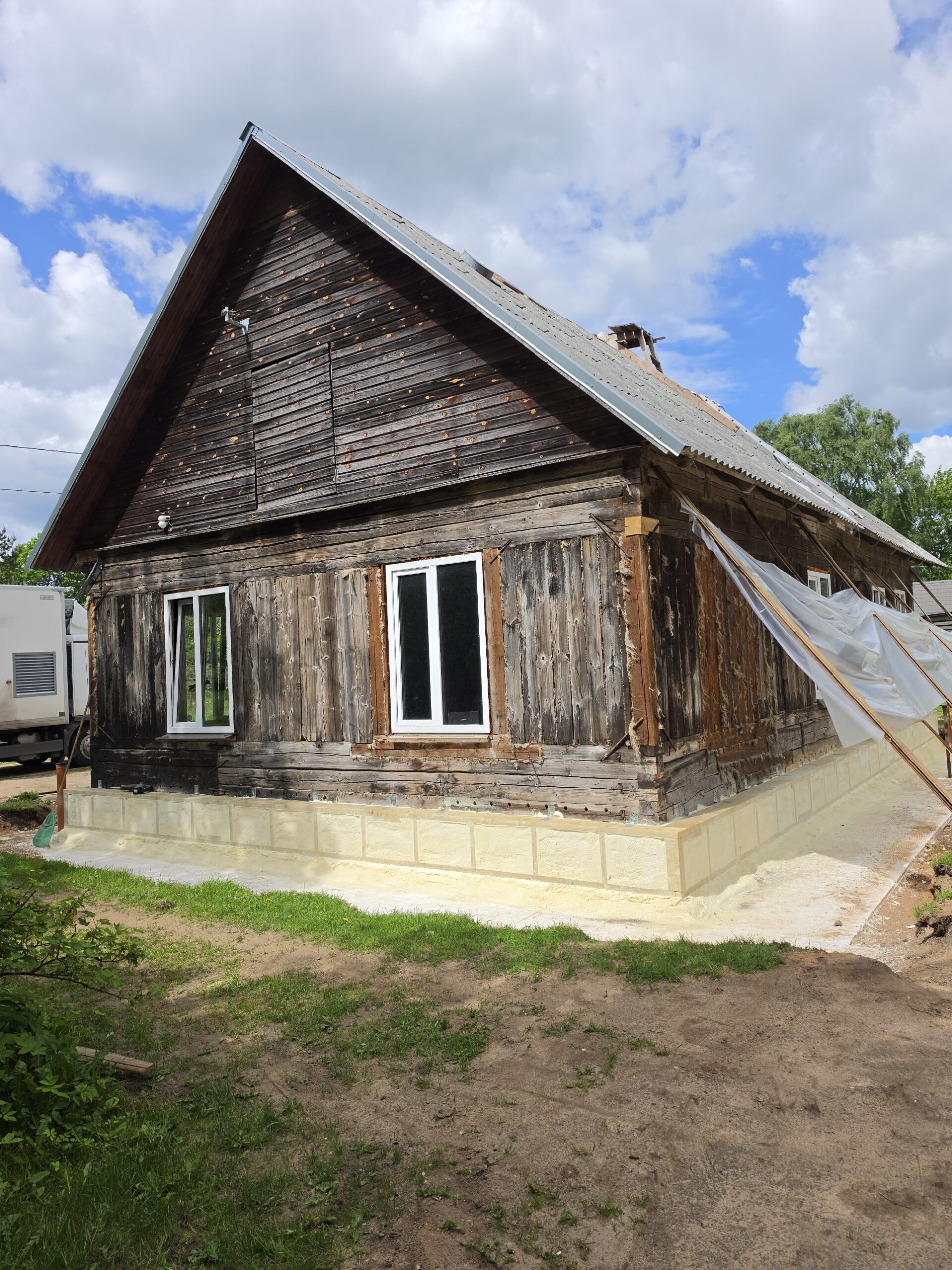
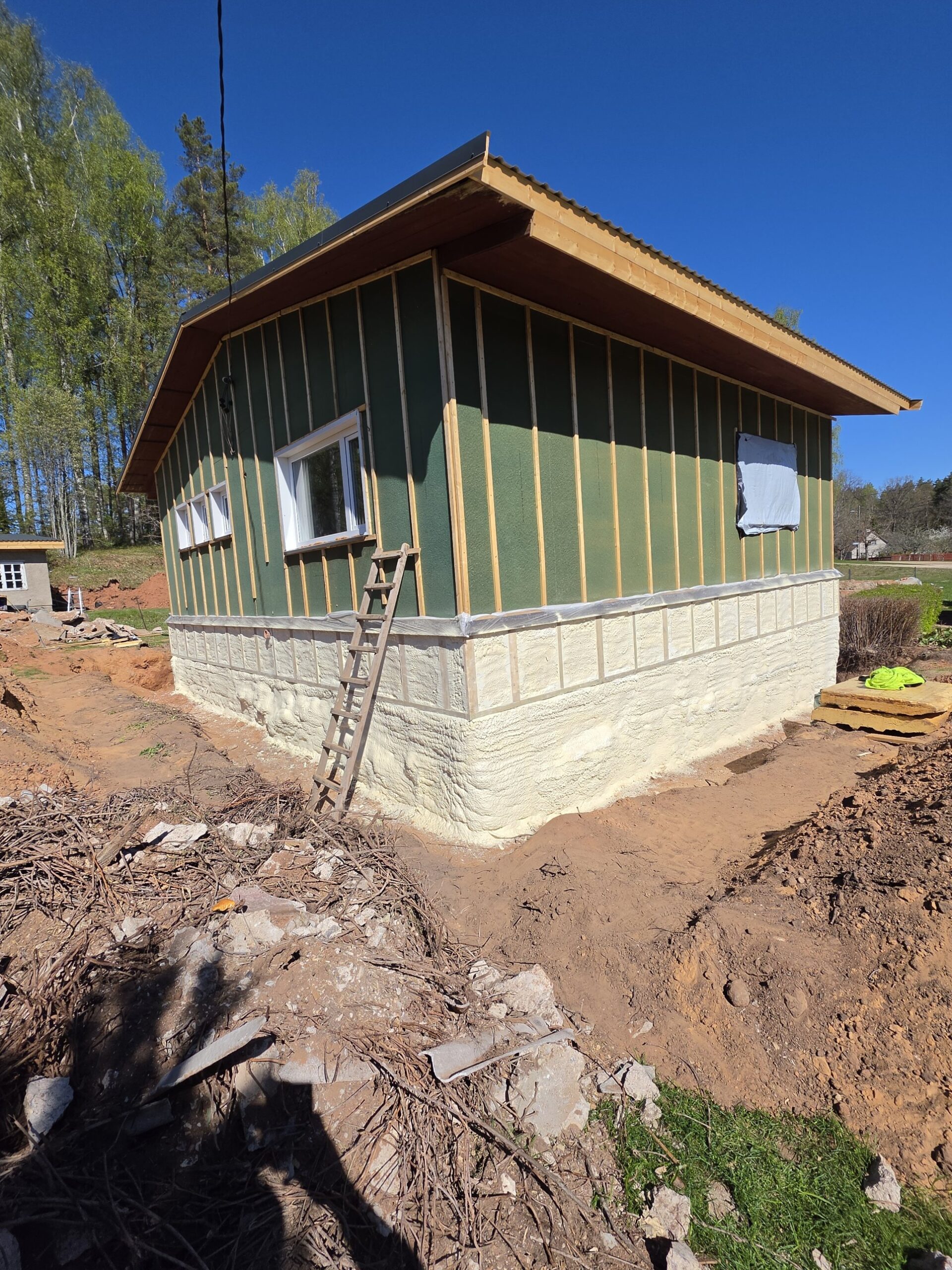
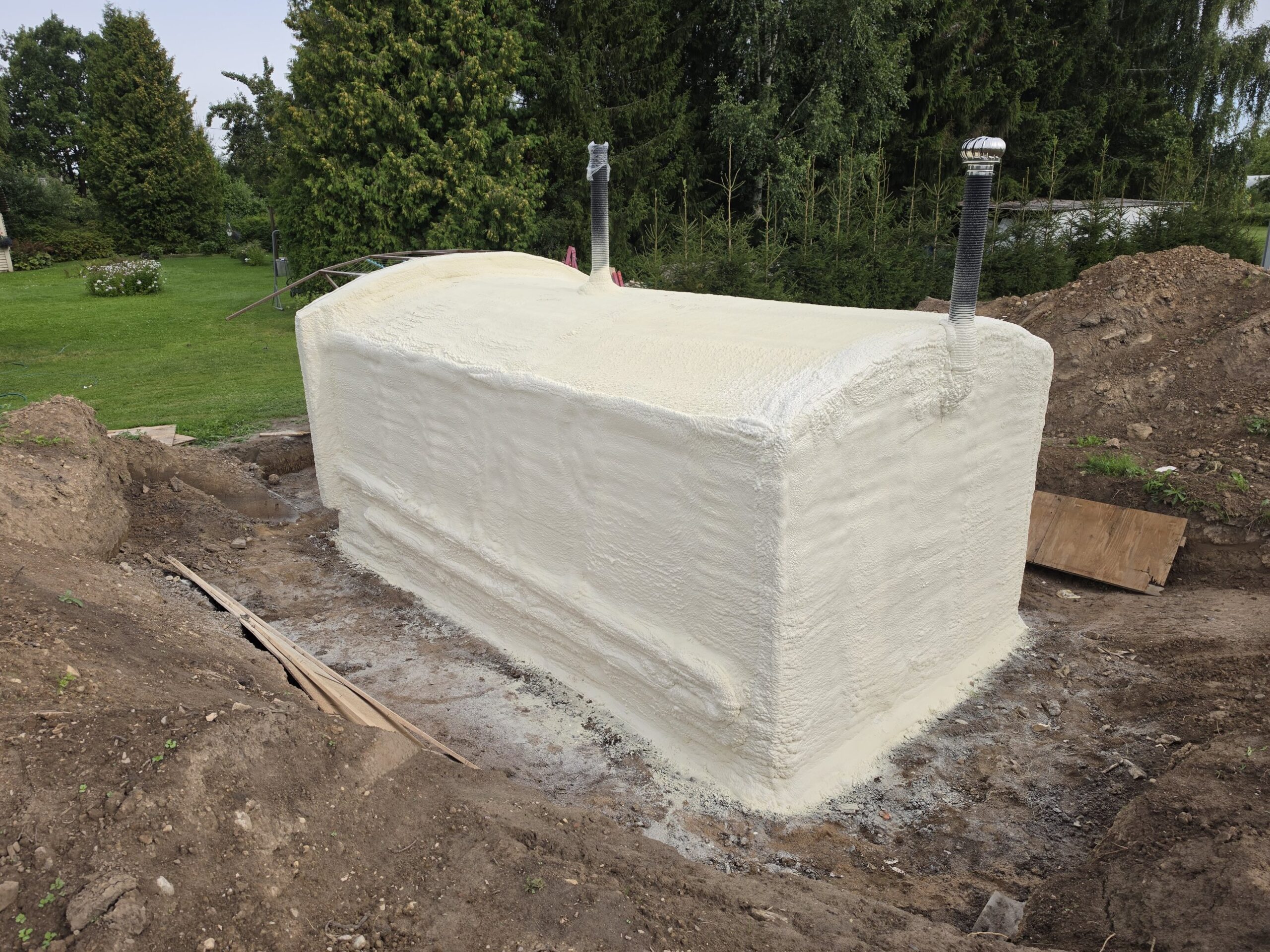
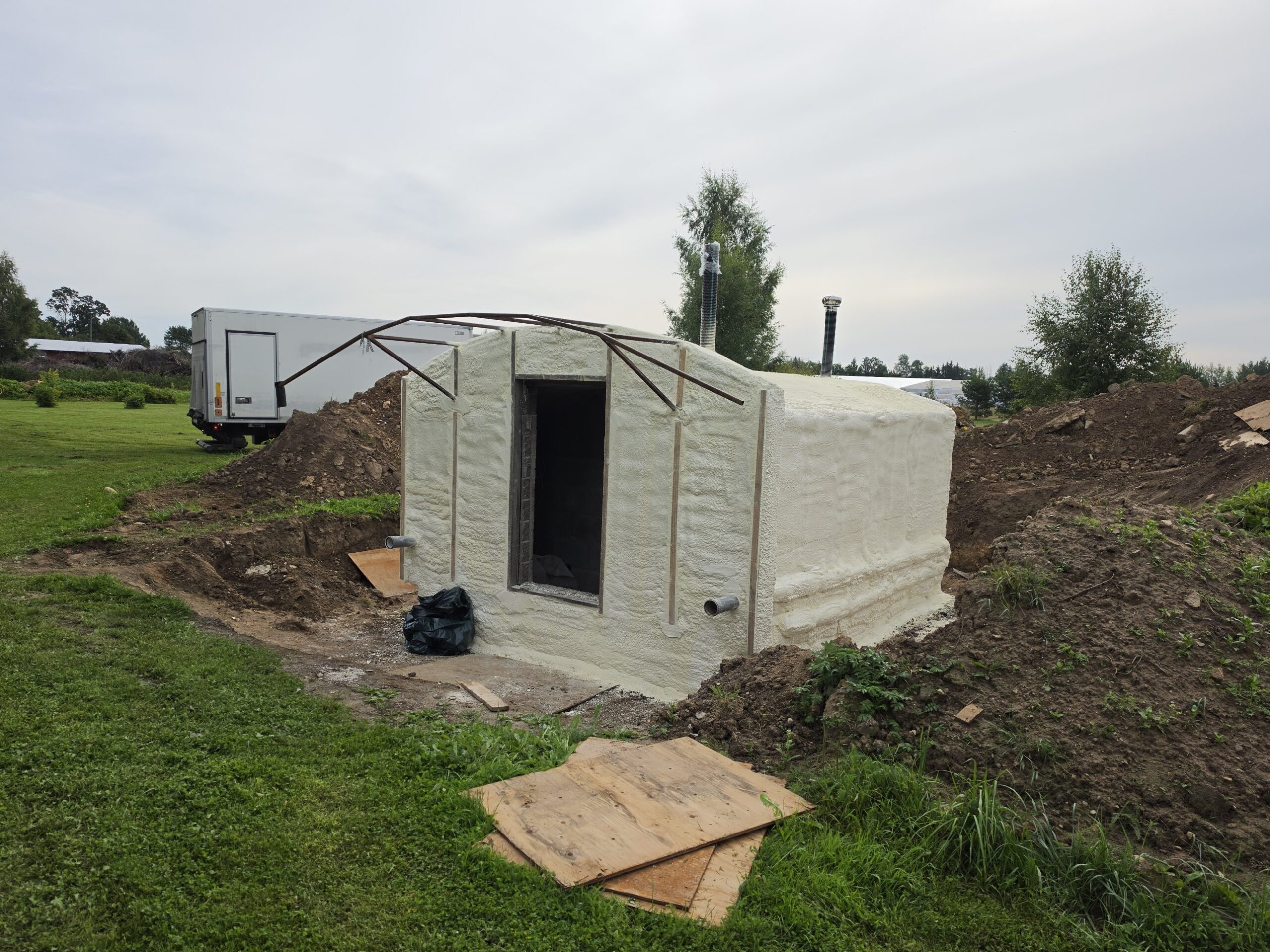
We insulate foundations and plinths with sprayable closed-cell PUR foam Heatlok Shield. The foam adheres directly to concrete or stone, fills cracks and unevenness, and forms a uniform layer without joints and fasteners. The work goes quickly: the trench can be backfilled on the very same day. You can find a comparison of open- and closed-cell foam on the page PUR foam insulation.
The price depends on thickness and volume. Send us the perimeter and height of the foundation and we will prepare a personal quote for you. Minimum charge €1350 + VAT.
Why insulate the foundations
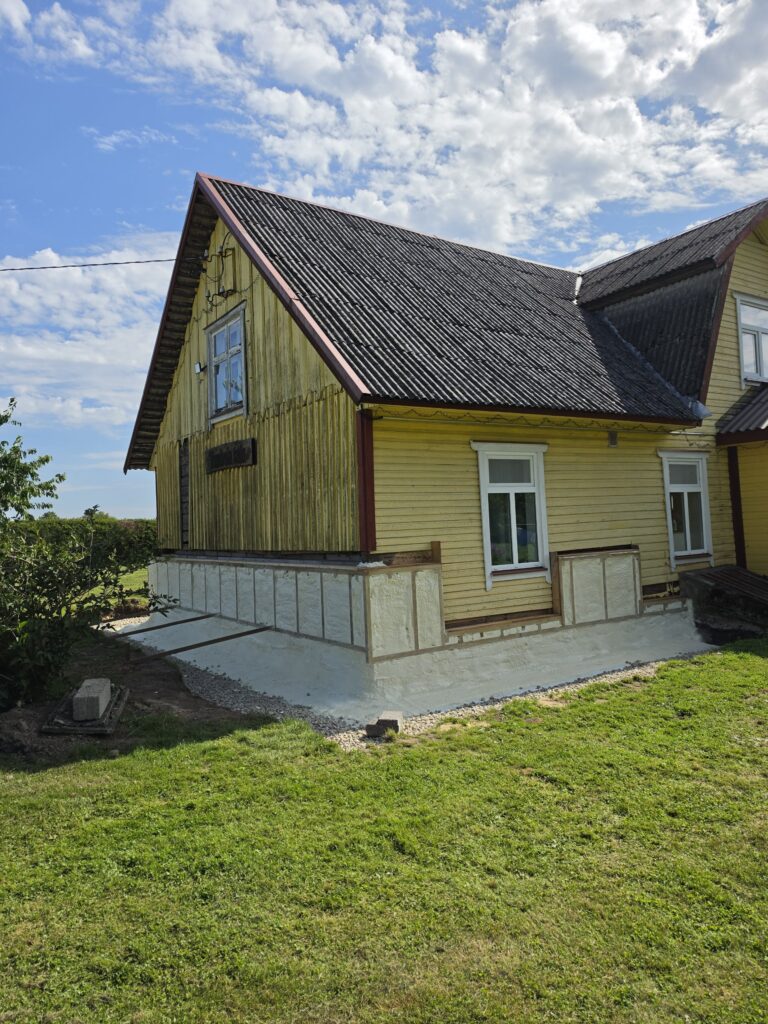
Through an uninsulated foundation, the floor, cellar walls and the lower part of the walls cool down. A foundation insulated from the outside remains on the warm side, while thermal bridges and the risk of frost heave are reduced. A warmer foundation means a warmer floor and a smaller heating bill.
Why closed-cell foam for the foundation
The foundation is exposed to ground moisture, rainwater and frost heave. Therefore, we only use closed-cell foam on the foundation, not open-cell loft or wall foam.
Heatlok Shield is a rigid PUR foam with a declared thermal conductivity of 0.027 W/(mK) and a compressive strength class of CS(10/Y)200. This means that the same thermal insulation can be achieved in a thinner layer than with board insulation, and the foam can also withstand the pressure of backfilling.
PUR foam or EPS and XPS board
An old concrete or stone foundation is rarely straight. EPS and XPS boards require a flat surface, adhesive and dowels, and an air gap remains between the board and the wall where moisture collects. The joints of the boards are thermal bridges. Read more about old house foundations in the article insulating the foundation of an old house with PUR foam.
Spray foam:
- fills gaps, cracks and corners between stones
- adheres to the substrate without fixings
- leaves no joints or air gaps
- covers pipe and cable penetrations evenly, which are always the weakest point with boards
Foundation insulation price
We invoice based on actual material consumption. For smaller jobs, a minimum charge of €1,350 + VAT applies.
Send us the perimeter and height of the foundation you want to insulate, and we will put together a personalised quote for you. See also PUR foam price.
How the work is done
We install closed-cell foam down to −5 °C.
Insulating the plinth
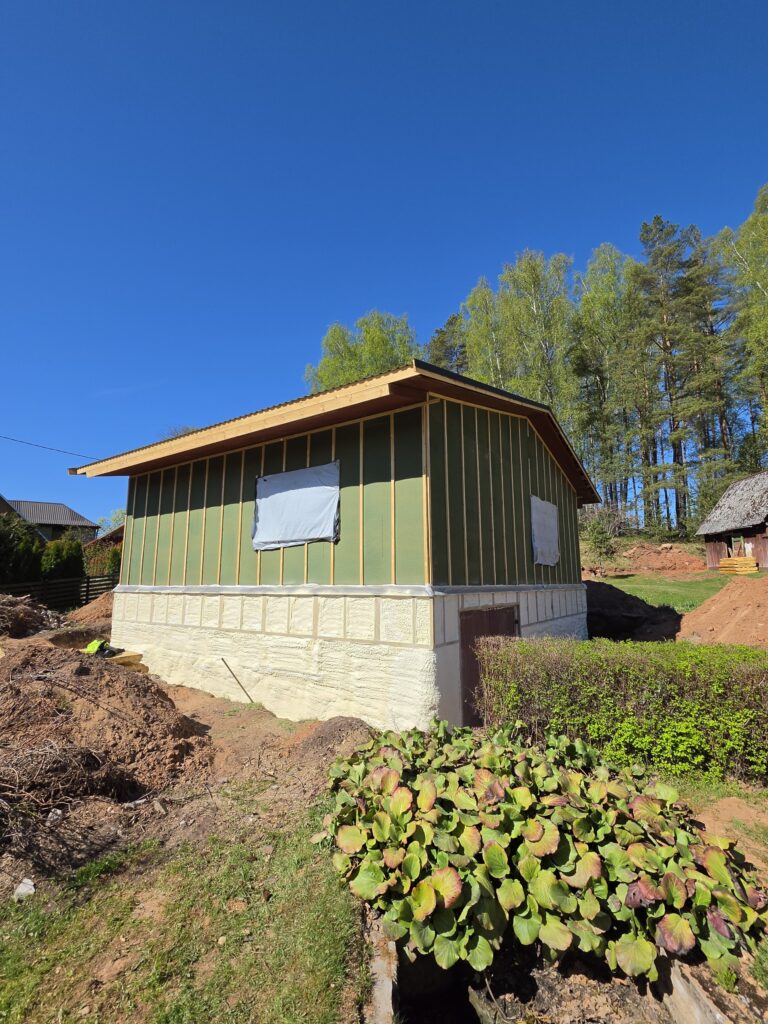
We insulate the plinth at the same time as the foundation. Foam is sprayed in an even layer from the underground part up to the wall, so that no joint is left at ground level. Through an uninsulated plinth, the floor and the lower part of the walls cool down.
The above-ground part is exposed to weather, UV radiation and splash water, which is why the foam there is covered with a suitable protective or finishing layer. The joint between the plinth and the wall is designed in such a way that the thermal bridge is reduced and water cannot enter the structure. Closed-cell Heatlok Shield adheres directly to concrete and stone, requiring no fasteners.
From the outside or the inside
Usually we insulate the outside of the foundation. That way the whole foundation stays on the warm side and the risk of frost heave is reduced. In special cases, the foundation can also be insulated from the inside.
Warranty and quality
We use Huntsman Building Solutions materials. The material and installation come with a 25-year manufacturer's warranty from Huntsman. Once the work is completed, we register the warranty and Huntsman sends a written certificate to the client. We are an official licensed installer of Huntsman and the first importer in Estonia. Since 2013, we have been installing Huntsman PUR foams exclusively.
Completed projects
All images →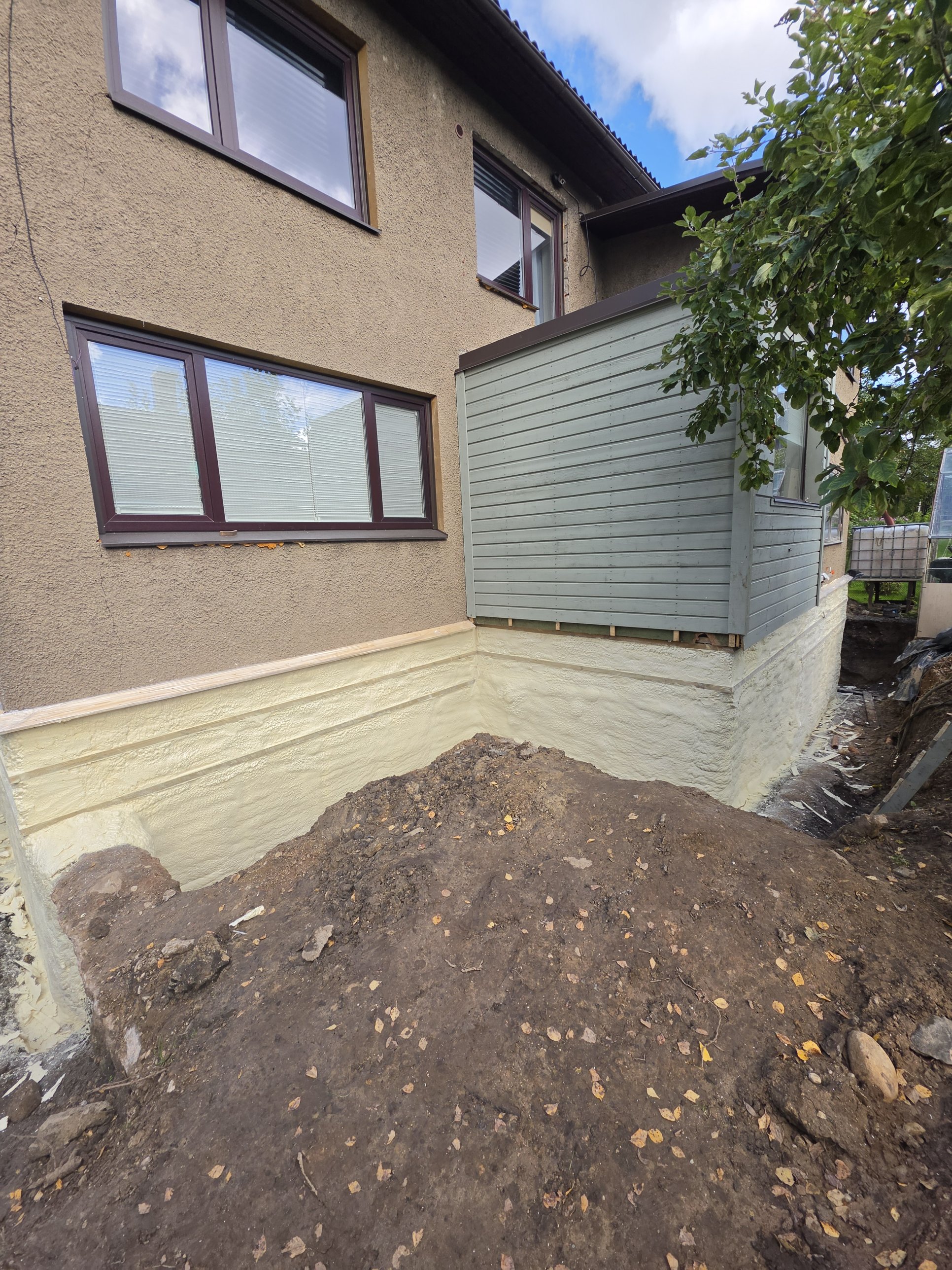
Frequently asked questions
Does PUR foam replace foundation waterproofing?
No. Closed-cell foam absorbs very little water, but a leaking or damaged foundation must be repaired before insulation.
How thick should the foundation insulation be?
Most frequently we do 100 mm. The exact thickness depends on the building and whether the basement is also being insulated.
Is PUR foam suitable for insulation of the plinth?
Yes. We will spray the foam in an even layer onto both the underground section and the plinth, simultaneously with the foundation. The above-ground section will be covered with a protective or finishing layer, as the foam must not be left exposed to the weather and UV radiation.
When should foundations not be insulated with PUR foam?
If the foundation is leaking, the basement wall is damp, cracks are shifting, or the drainage is not working, these must be fixed before insulation, because the insulation must not seal in the moisture problem.
Can backfilling continue immediately?
Yes, 1 to 2 hours after spraying.
Can work be done in winter?
Yes, we install closed-cell foam down to −5 °C.