 Skip to content

Wall insulation with PUR foam
We insulate the walls of new and old houses with sprayable PUR foam from both inside and outside. The foam fills the gaps in the frame with an even layer, seals cracks and corners, and tightly surrounds windows, pipes and wires. The result is an airtight wall without gaps or sagging. You can find other parts of the building on the page PUR foam insulation.
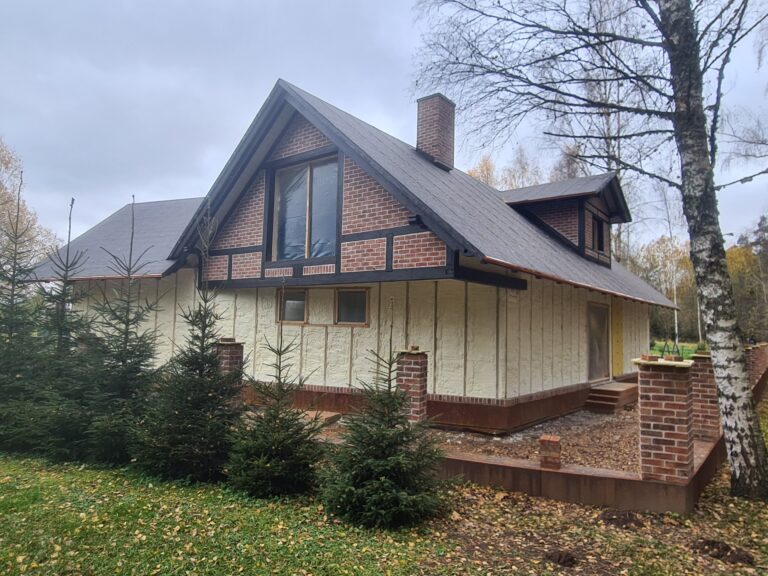
Insulating the walls of a timber-frame house
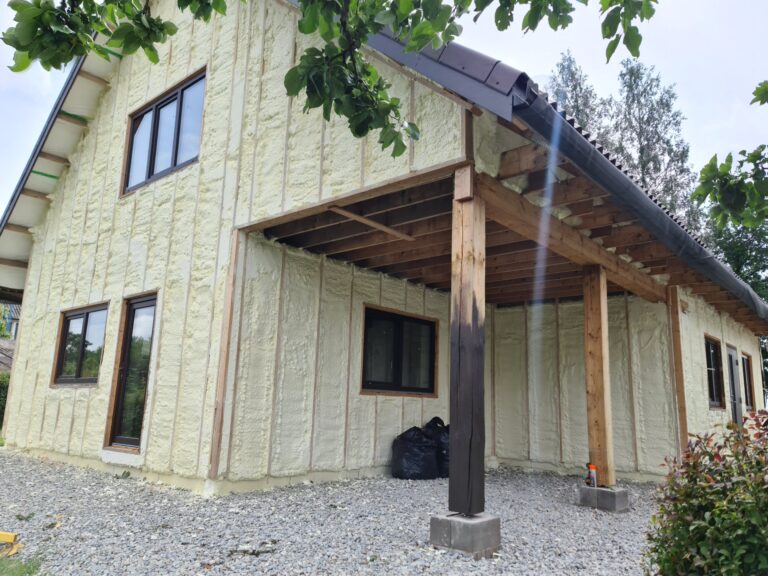
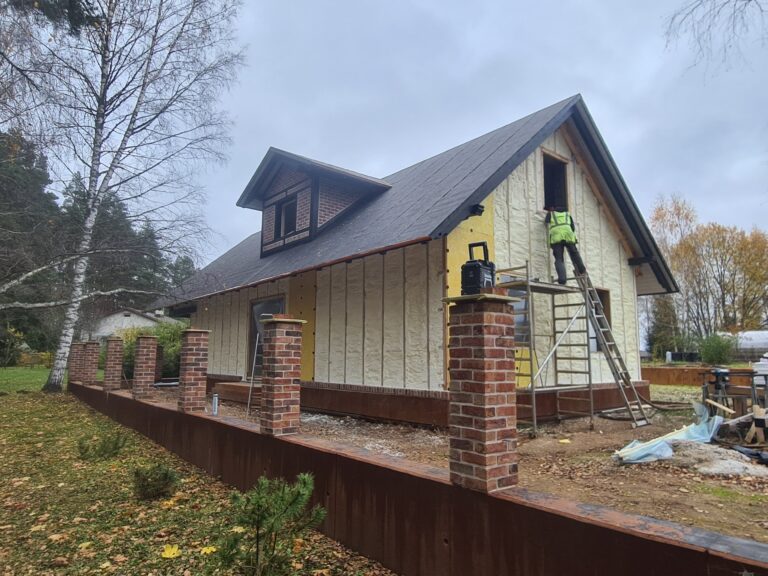
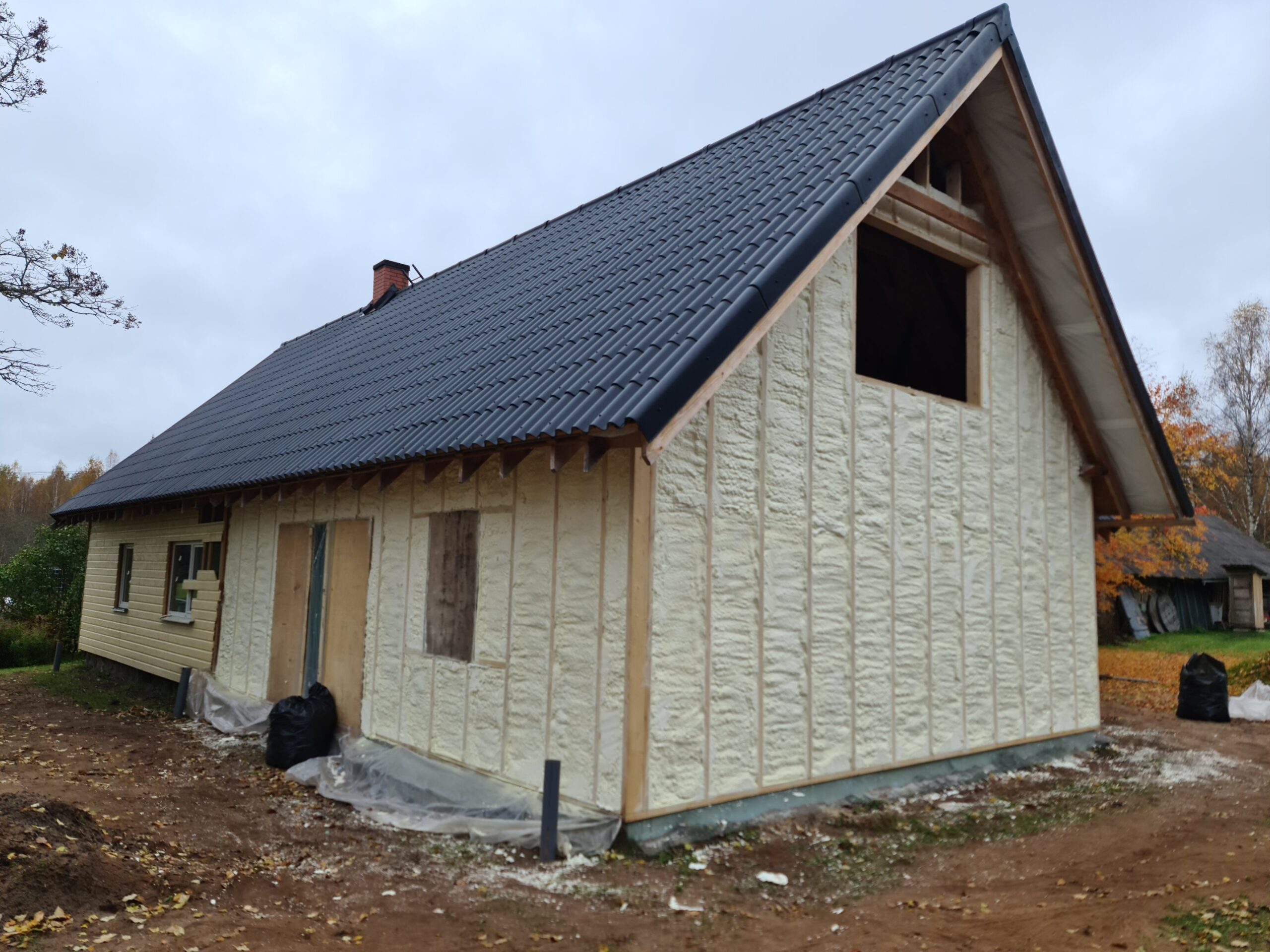
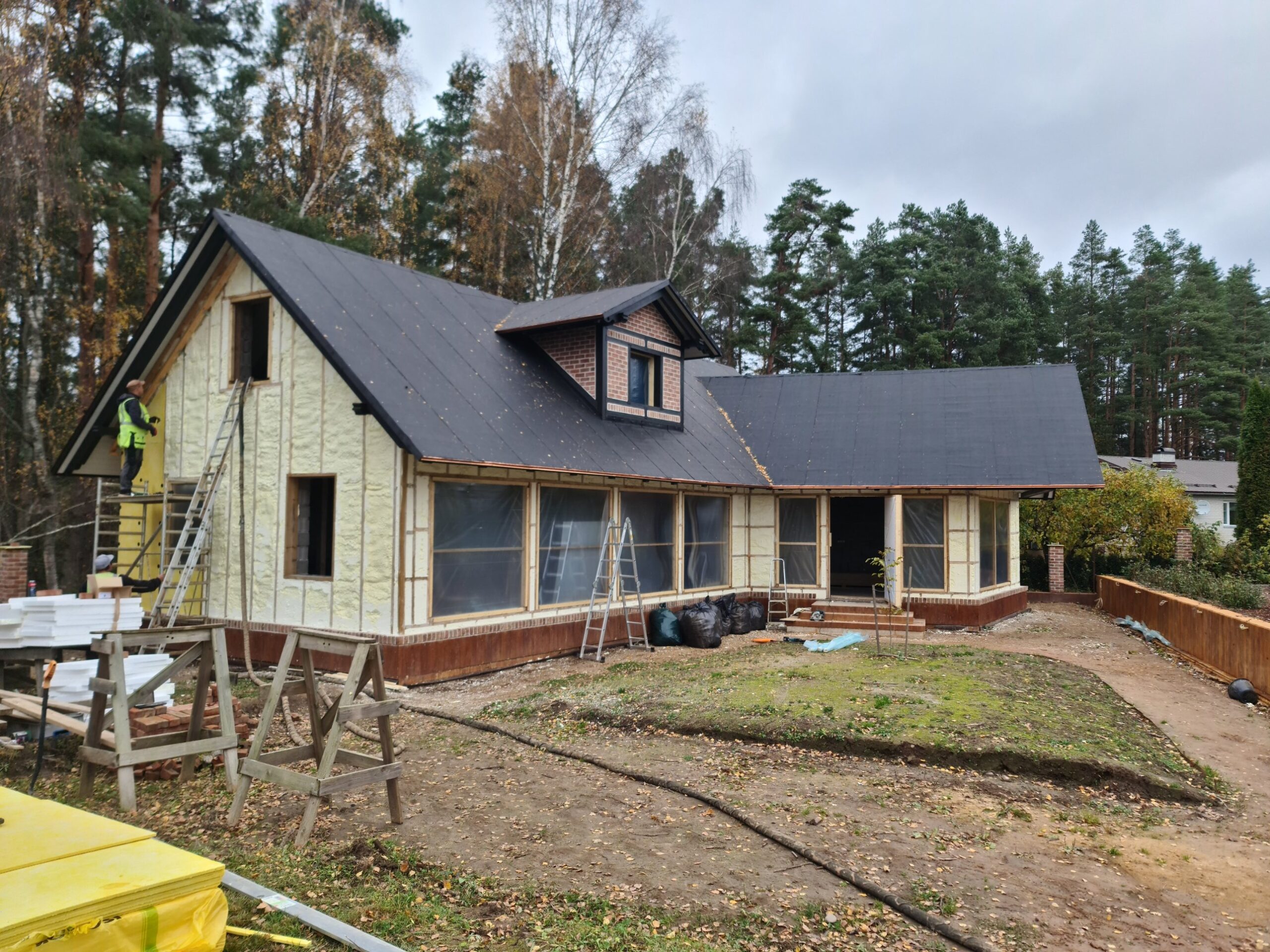
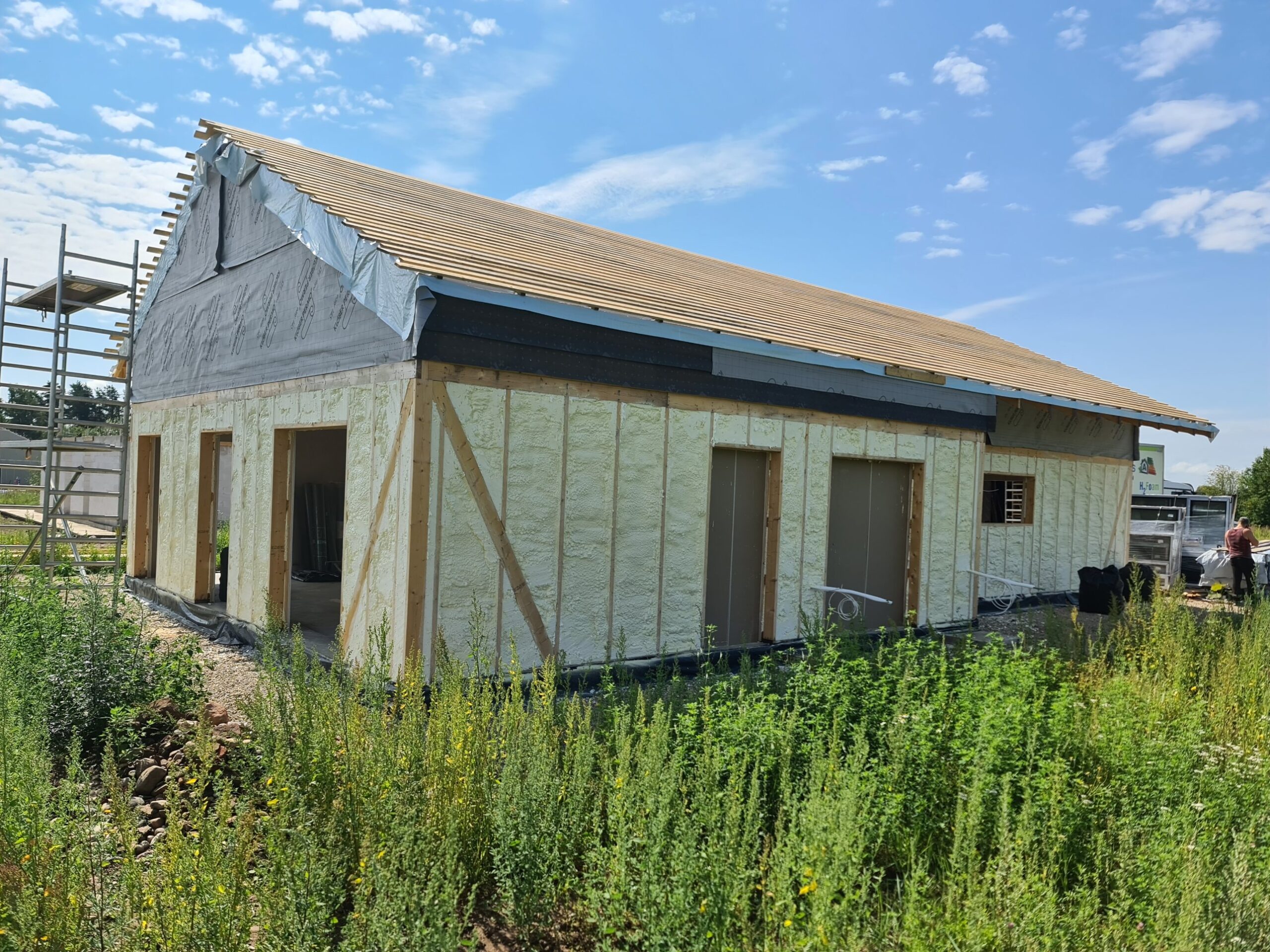
In timber-frame buildings, we spray foam between the timber studs, either from the inside before interior finishing or from the outside before the facade. The foam adheres to practically all building materials and also fills narrow and uneven gaps where it is difficult to install mineral wool properly. Open-cell foam also dampens sound, which is why it is suitable for partition walls.
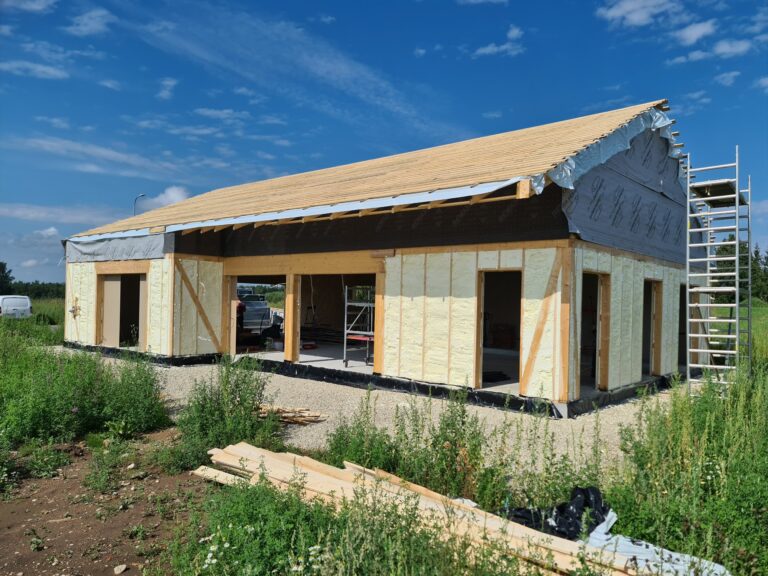
Insulation of old house walls
When renovating an old house, the old insulation and interior finishes are removed, after which we spray the foam between the open framing studs in the same way as in a new house. The old wall gets new, uniform insulation and air leaks disappear.
In exceptional cases, where you do not want to open up the wall and there is a closed cavity in it, the foam can also be injected. Read more: Injecting PUR foam into cavities.
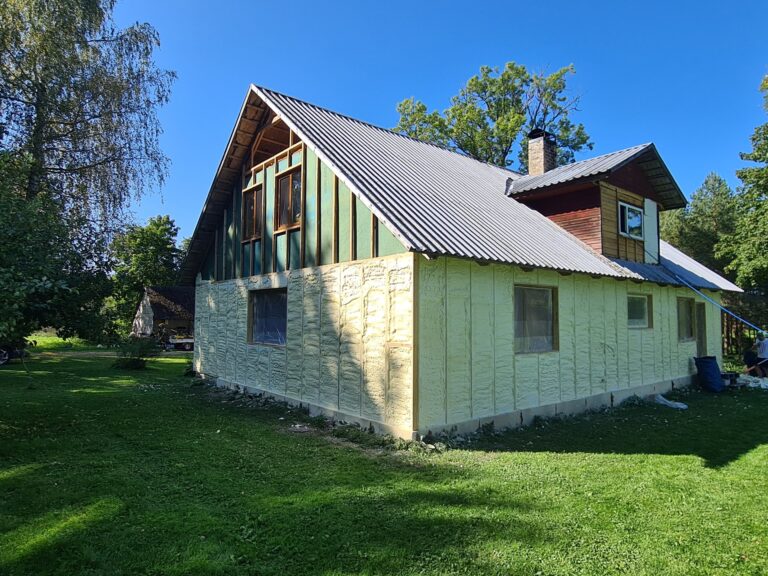
External facade insulation
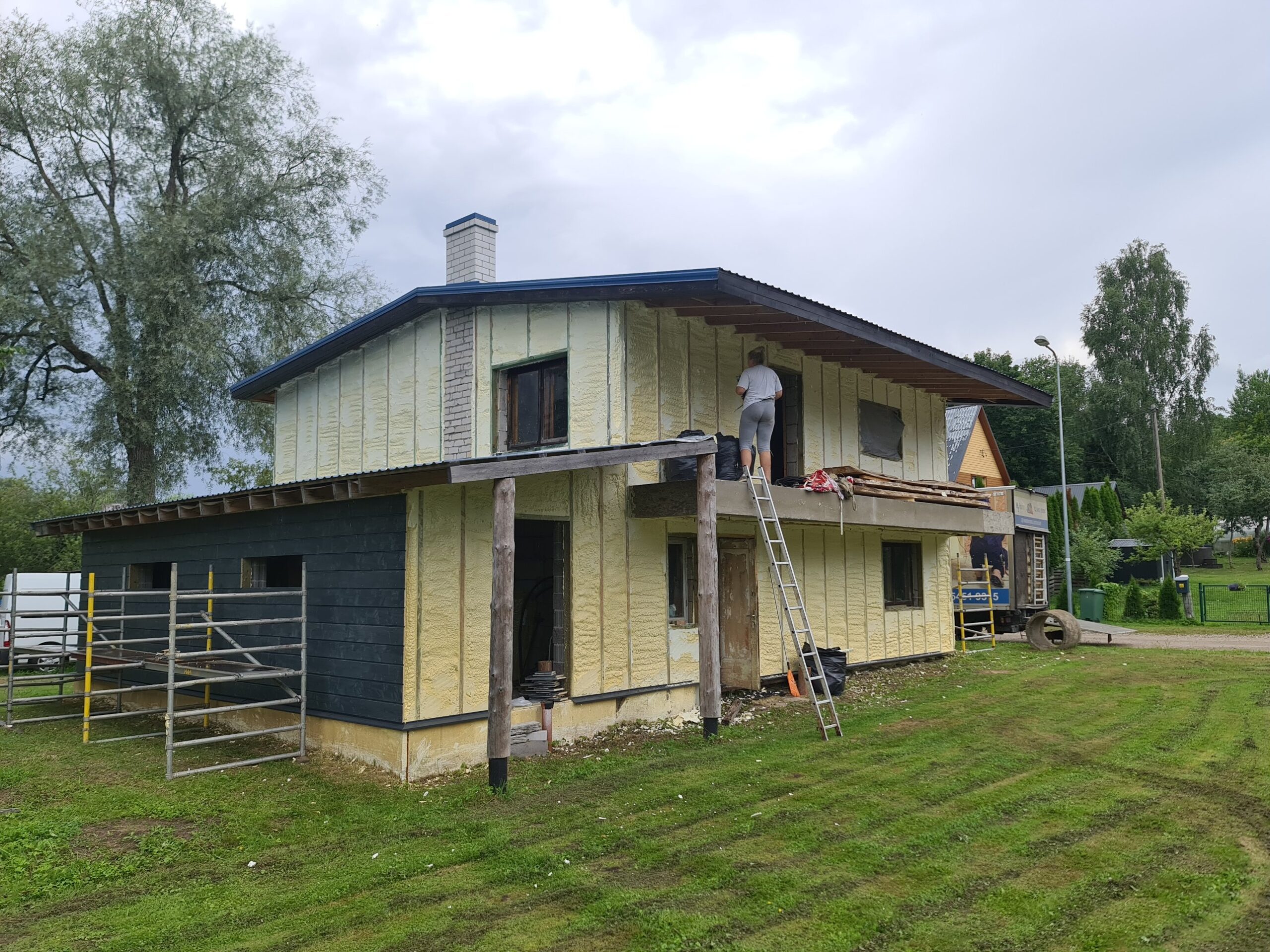
When the facade is replaced or taken apart, the external wall can be insulated from the outside. A framework is fixed onto the wall, foam is sprayed between the framework and then the new facade cladding is installed. The entire wall remains on the warm side and the interior finishing does not need to be touched.
Insulation of a stone house and concrete wall
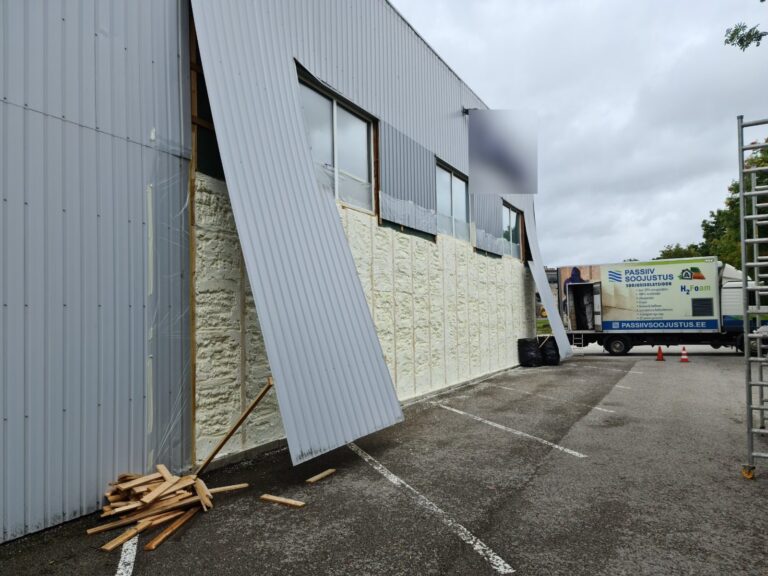
For stone and concrete walls, we mostly use closed-cell Heatlok Shield foam, which adheres directly to the wall and fills any irregularities. Stone walls can be insulated from both the outside and the inside. See also the work overview insulating the walls of a private school with PUR foam in Tallinn.
Inside or outside
A wall can be insulated from both the inside and the outside; the choice depends on the house and which side is exposed.
With a log and stone house, it is structurally logical to insulate from the outside, because then the entire wall remains on the warm side. However, insulating these materials from the inside also yields a good result, for instance if you do not want to alter the facade. Read more about log houses in the article insulating a log house with PUR foam.
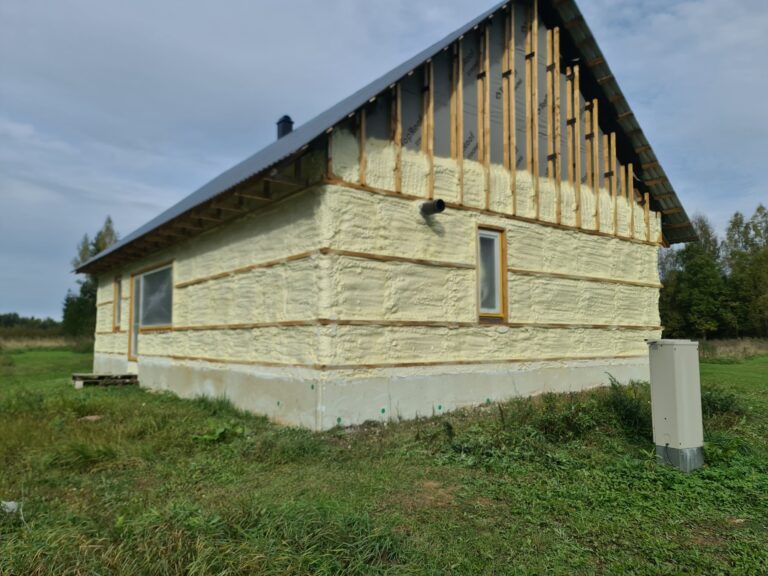
What foam and how thick a layer
The typical thickness of wall insulation is 50 to 200 mm. We use two Huntsman foams, the choice depends on the building type:
- H2Foam Lite+, open-cell foam. Mostly suitable for timber-framed residential walls.
- Heatlok Shield, closed-cell rigid foam. Mostly suitable for masonry walls and metal structures.
In industrial buildings we use both foams, depending on the structure. We choose the suitable solution together with the client according to the site.
Why PUR foam, not wool
- An even layer without gaps. Foam fills corners, penetrations and uneven gaps.
- Airtight. The wind does not blow through the wall and warm air does not leak out.
- Does not sag. The foam stays in place and does not sag over the years.
- Fast. We insulate up to 500 m² in a single day.
Price
The price depends on the area, layer thickness and chosen foam. We calculate based on actual material consumption.
Send us the area of the walls and the layer thickness, and we will prepare a personal quote for you. If the thickness is not known, we will recommend a suitable one. See also PUR foam price.
How the work is done
Open-cell foam can be installed down to −15 °C, closed-cell foam down to −5 °C.
Warranty and quality
We use Huntsman Building Solutions materials. The material and installation come with a 25-year manufacturer's warranty from Huntsman. Once the work is completed, we register the warranty and Huntsman sends a written certificate to the client. We are an official licensed installer of Huntsman and the first importer in Estonia. Since 2013, we have been installing Huntsman PUR foams exclusively.
Completed projects
All images →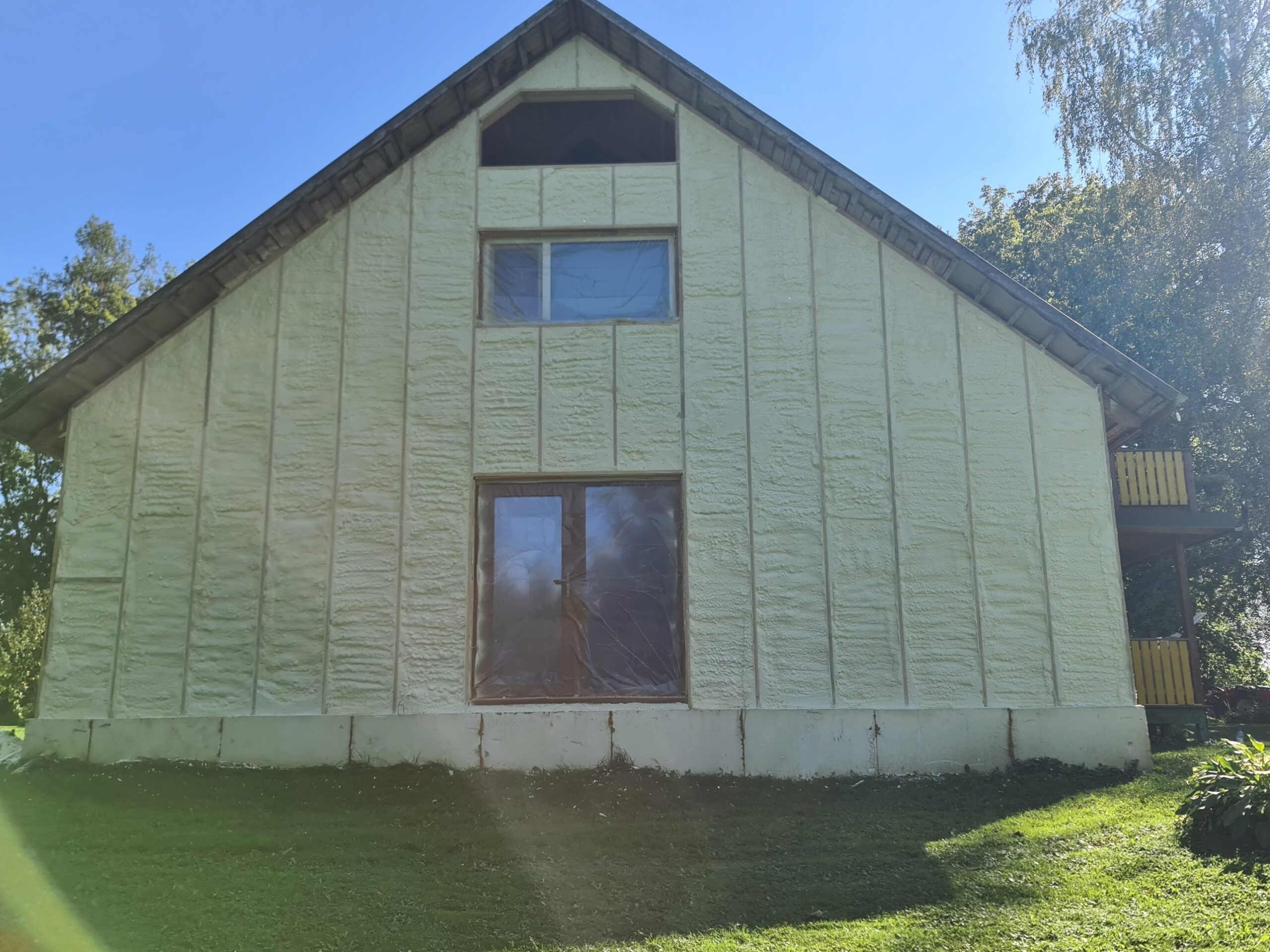
Read also the project overview: Insulating private school walls with PUR foam in Tallinn.
Frequently asked questions
Can the facade be insulated from the outside?
Yes. A wall can be insulated from both the inside and the outside. In the case of a log or stone house, insulating from the outside is more logical from a structural point of view, but interior insulation also yields results.
Is a vapour barrier necessary when insulating a wall?
It depends on the construction and use of the rooms. We will review the layers on site and provide a recommendation. Read more: Is a vapour barrier needed for PUR foam?
Should the pipes and cables be installed before insulation?
Pipes that go inside the wall must be installed before insulation. Cables can also be installed later if there is a sufficient gap between the foam and the finishing layer.
Can the wall of an old house be insulated without taking it apart?
In exceptional cases, yes, if there is a closed cavity in the wall. In that case, we inject the foam into the wall.
How thick should the wall insulation be?
Usually 50 to 200 mm, depending on the depth of the framework and the type of building.
When can the rooms be used after insulation?
After 12 hours of airing.