 Skip to content

Insulation of industrial buildings and hangars with PUR foam
When insulating metal buildings, the purpose is not only to provide thermal insulation but also to reduce condensation. Spray PUR foam adheres to the metal, follows the corrugated sheet and forms a uniform, joint-free layer. Read more about residential insulation on the page PUR foam insulation.
We insulate hangars, production and storage buildings, metal structures and shipping containers.
Why does condensation occur in a metal building
Condensation occurs when the surface temperature falls below the dew point of the surrounding air. In an unheated hangar, a metal roof can cool down rapidly at night, whereas in a heated production building, warm, moist air reaches the cold sheet metal through air leaks. Condensation water falls onto equipment and goods, accelerating corrosion.
Insulation raises the interior surface temperature and reduces the contact of warm, moist air with cold metal. Alongside this, indoor air humidity and ventilation must also be checked.
Which foam
For metal structures and containers, we mostly use closed-cell Heatlok Shield foam. It is rigid, adheres well to metal, and blocks water vapour better. In some cases, open-cell H2Foam Lite+ is also suitable if a thicker, lighter layer is needed and the moisture management has been designed accordingly.
We spray closed-cell foam in layers up to 5 cm thick, for example, a 100 mm layer is applied in two layers.
Inside or outside
Industrial buildings can be insulated from both the inside and the outside. When insulating from the outside, we mostly use closed-cell foam. The thickness of the layer depends on whether the goal is to reduce condensation, maintain positive temperatures, or use the building heated year-round.
Preparation
- Surface inspection. We assess the condition of the surface before starting work on site and let you know if anything needs to be done beforehand.
- Dry surface. The surface must be free from condensation, ice and frost.
- Leaks fixed. Active leaks and corrosion damage must be repaired first.
- Equipment covered. Equipment, lighting and surfaces that are not foamed are to be covered.
Preparation work is not included in the price unless agreed separately for the specific project.
Fire safety
The reaction to fire class of PUR foam is E. Where fire safety requirements apply, the foam is covered with fire protection boards or a fire-retardant coating. Plan the fire protection and finishing before installation.
Price
The price depends on the surface area, the thickness of the layer, and the foam chosen. We calculate it based on the actual material consumption. The minimum charge for closed-cell foam is €1,350 + VAT.
Send us the area and layer thickness and we will put together a personal quote for you. If the thickness is not known, we will recommend a suitable one. See also PUR foam price.
How the work is done
We install closed-cell foam down to −5 °C, and open-cell foam down to −15 °C.
Warranty and quality
We use Huntsman Building Solutions materials. A 25-year Huntsman warranty applies to both the material and the installation. Once the work is complete, we register the warranty and Huntsman sends a written certificate to the customer. We are an official licensed installer of Huntsman and the first importer in Estonia. Since 2013, we have been installing exclusively Huntsman PUR foams.
Completed projects
All images →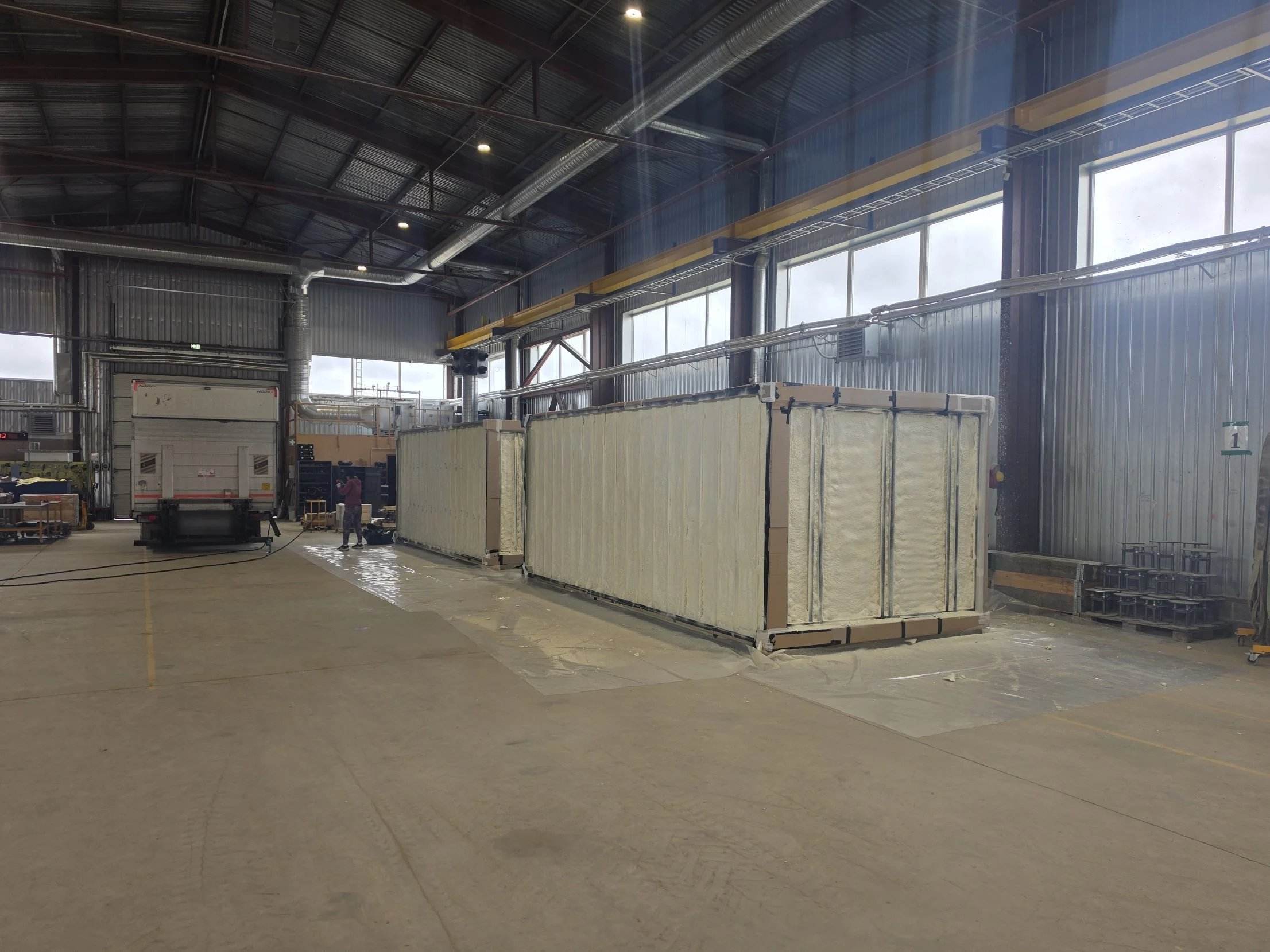
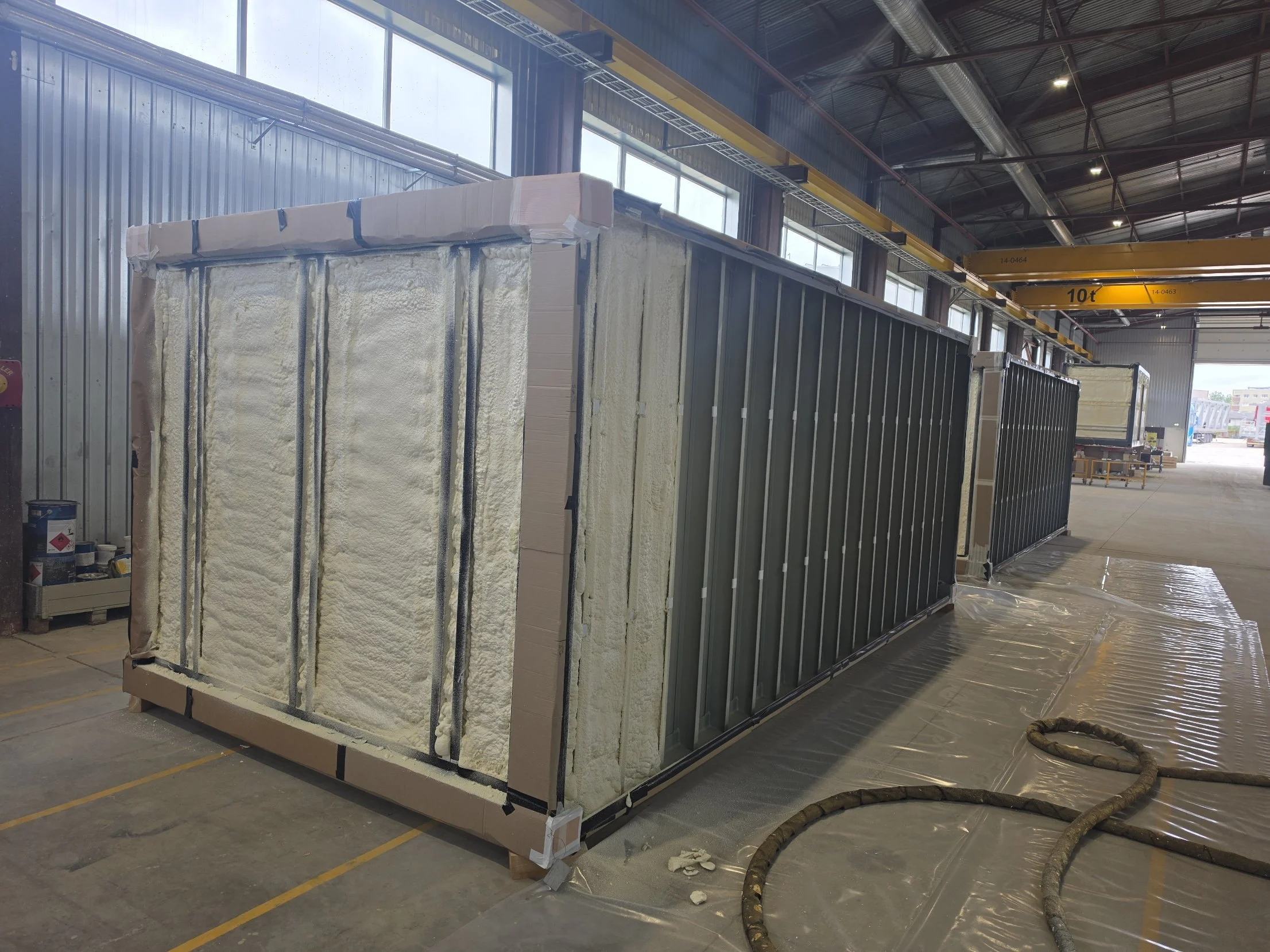
Read also the project overview: Insulating the mobile shooting range with closed-cell PUR foam.
Frequently asked questions
Does PUR foam reduce condensation beneath a metal roof?
A continuous layer of insulation reduces surface cooling and air reaching the cold metal. To achieve the desired result, the moisture source, ventilation and thermal bridges must also be addressed.
Can foam be sprayed onto painted metal?
Yes, if the paint layer is strong, clean and compatible with the foam. Any loose or unknown coating must be tested beforehand or removed.
Can a shipping container be insulated with PUR foam?
Yes. Sprayed closed-cell foam follows the corrugated wall of the container and reduces thermal bridges and air leaks. The layer thickness depends on whether the container is a storage unit or a space heated all year round.
Does the foam need to be covered afterwards?
It depends on the application area. Foam that remains visible may require a fire protection, UV or finishing coat. The appropriate coating is selected based on the specific product and requirements.