 Skip to content

Roof insulation with PUR foam: sloped ceiling and attic
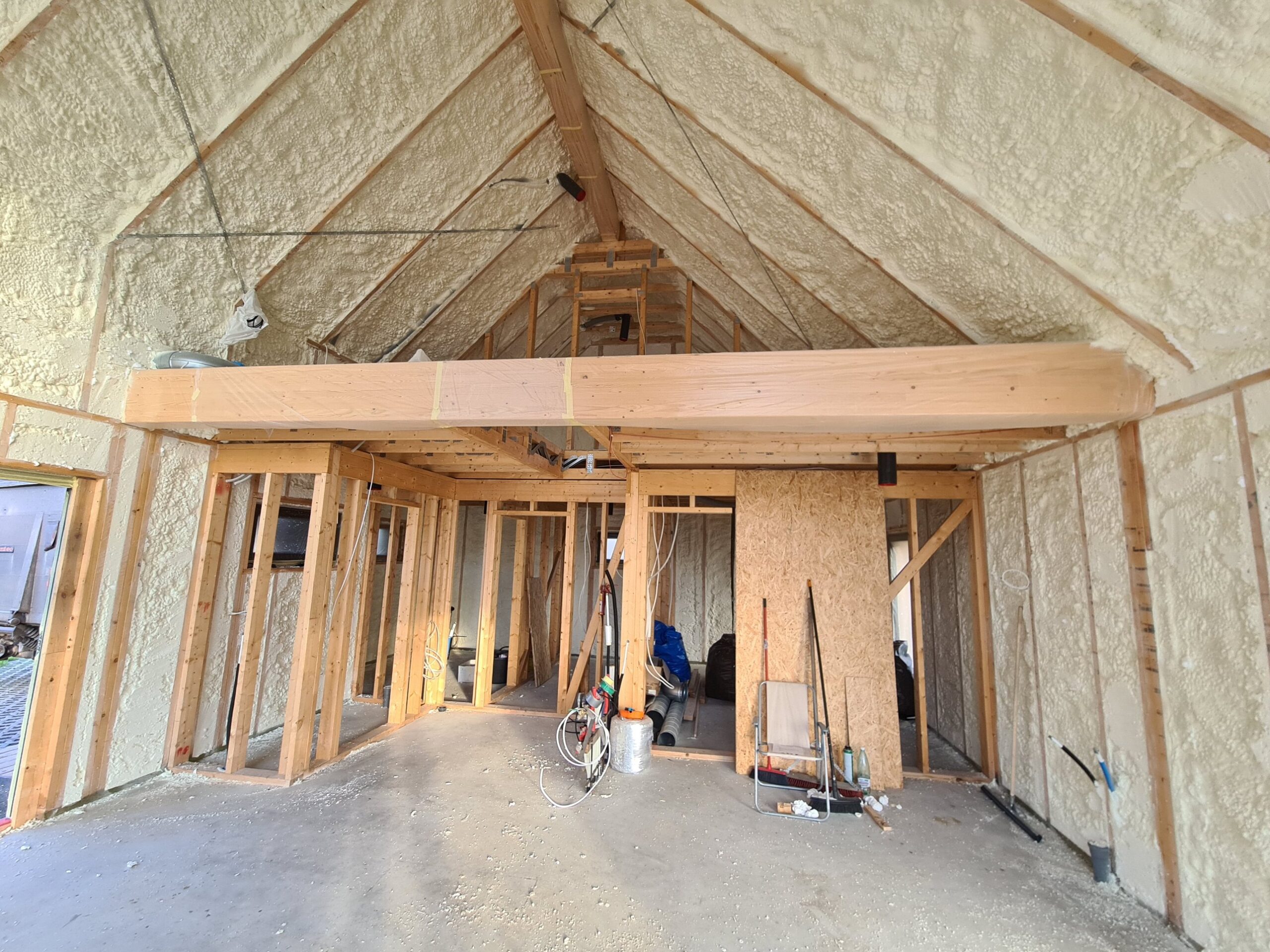
We insulate sloped ceilings and loft floors with spray PUR foam. The foam expands between the rafters or joists, fills all gaps and corners, and forms a uniform, airtight layer. The work can be done quickly and all year round. All applications of PUR foam are listed on the page PUR foam insulation.
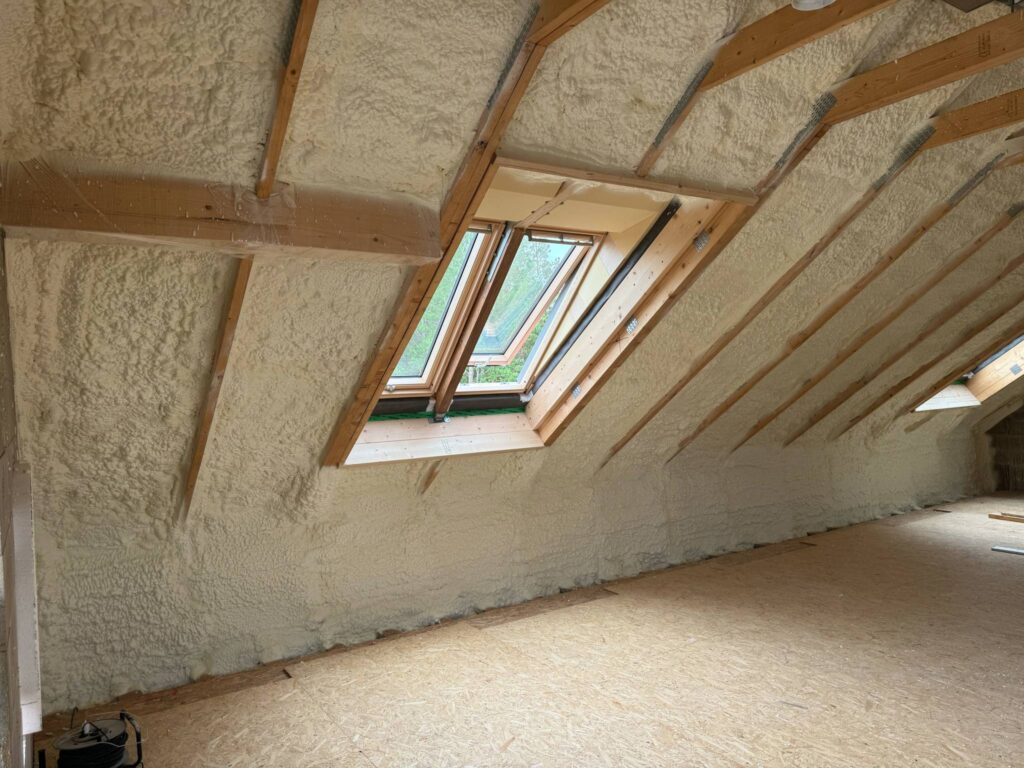
Insulating the sloped ceiling from the inside
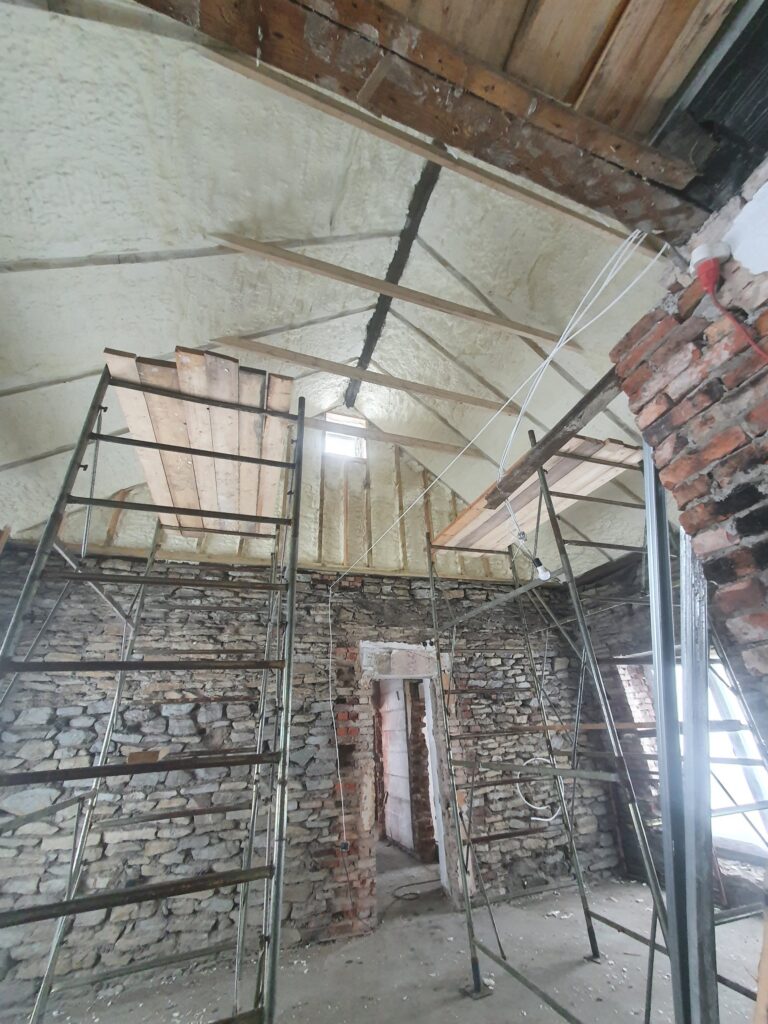
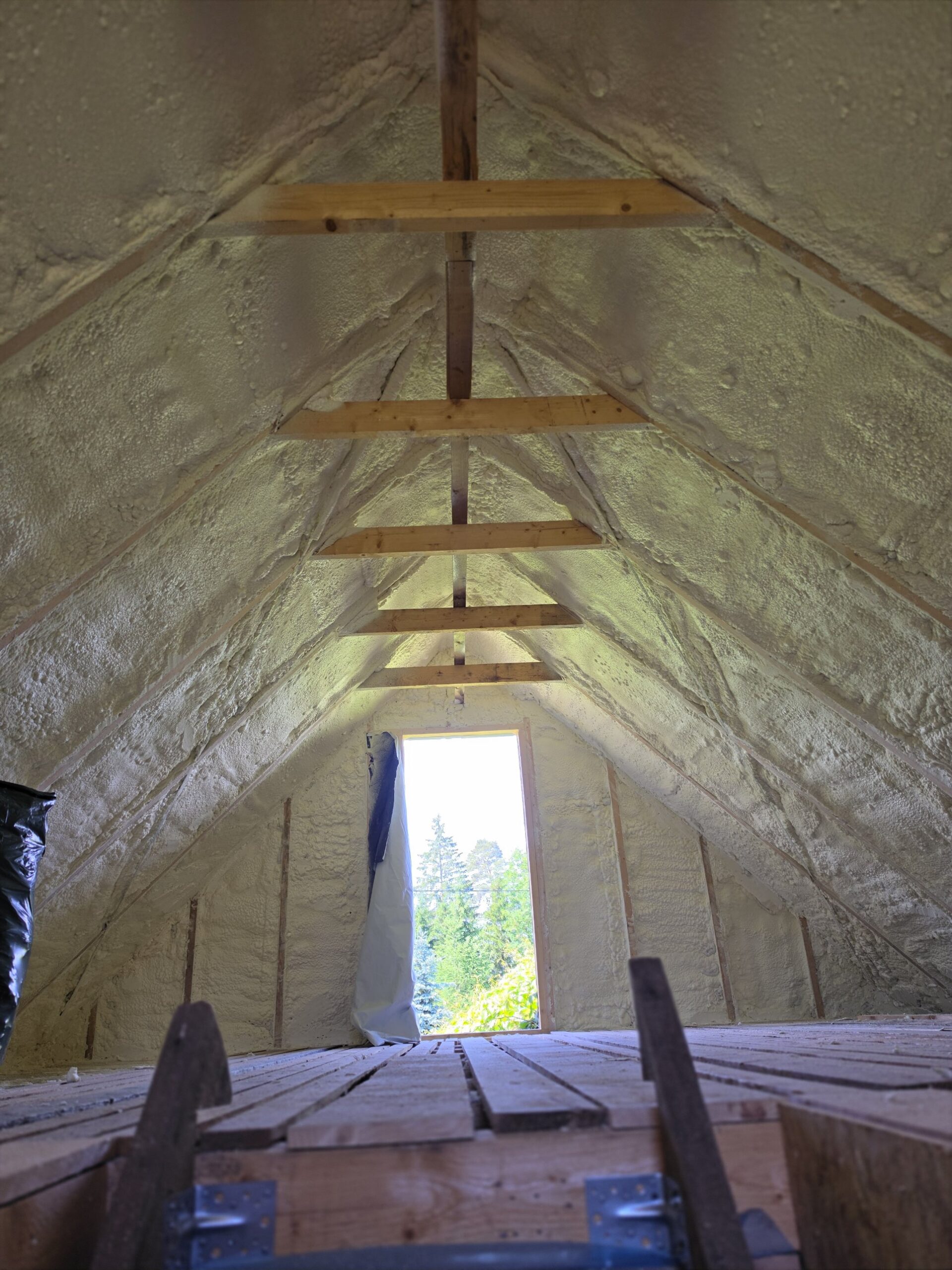
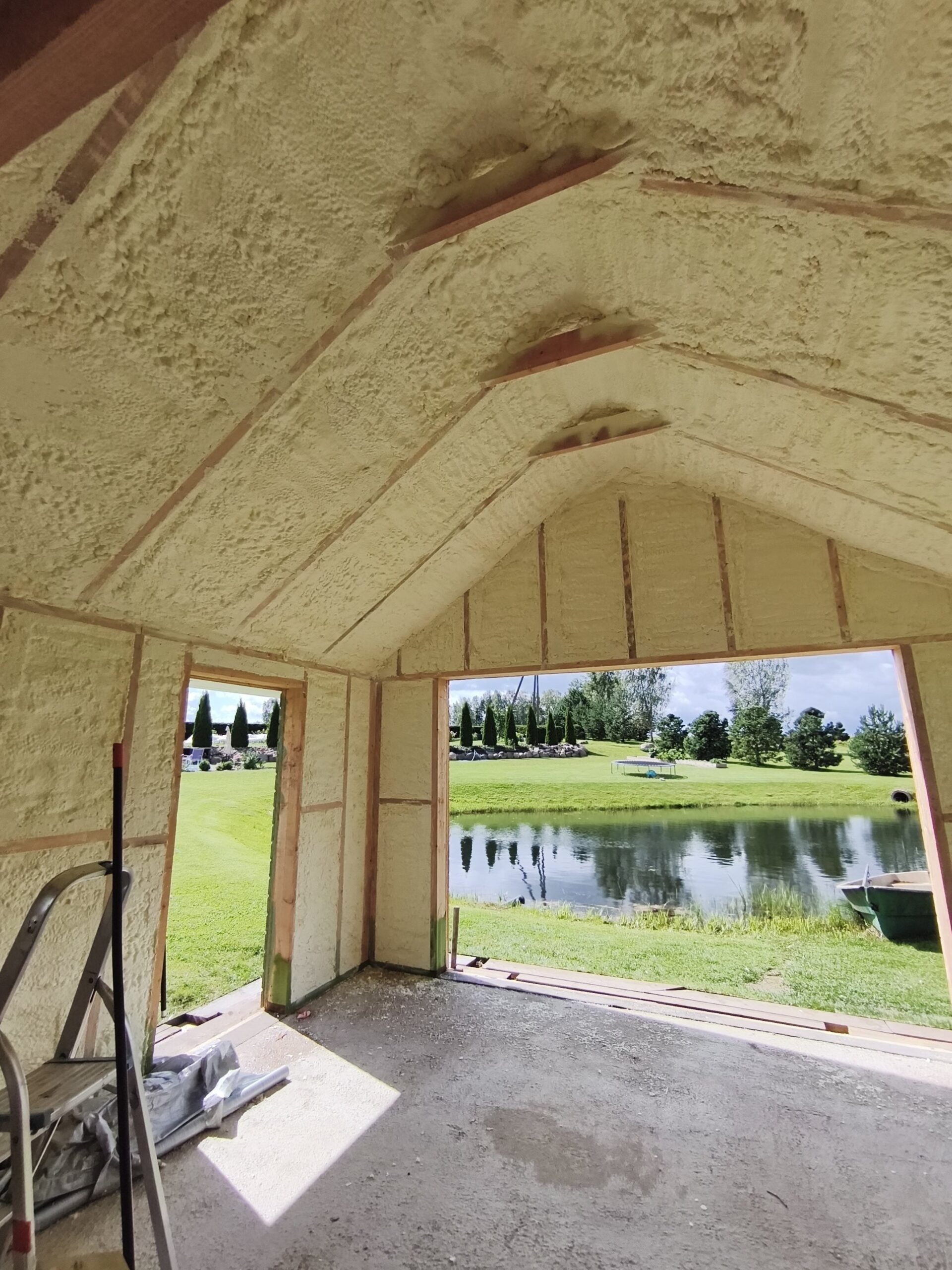
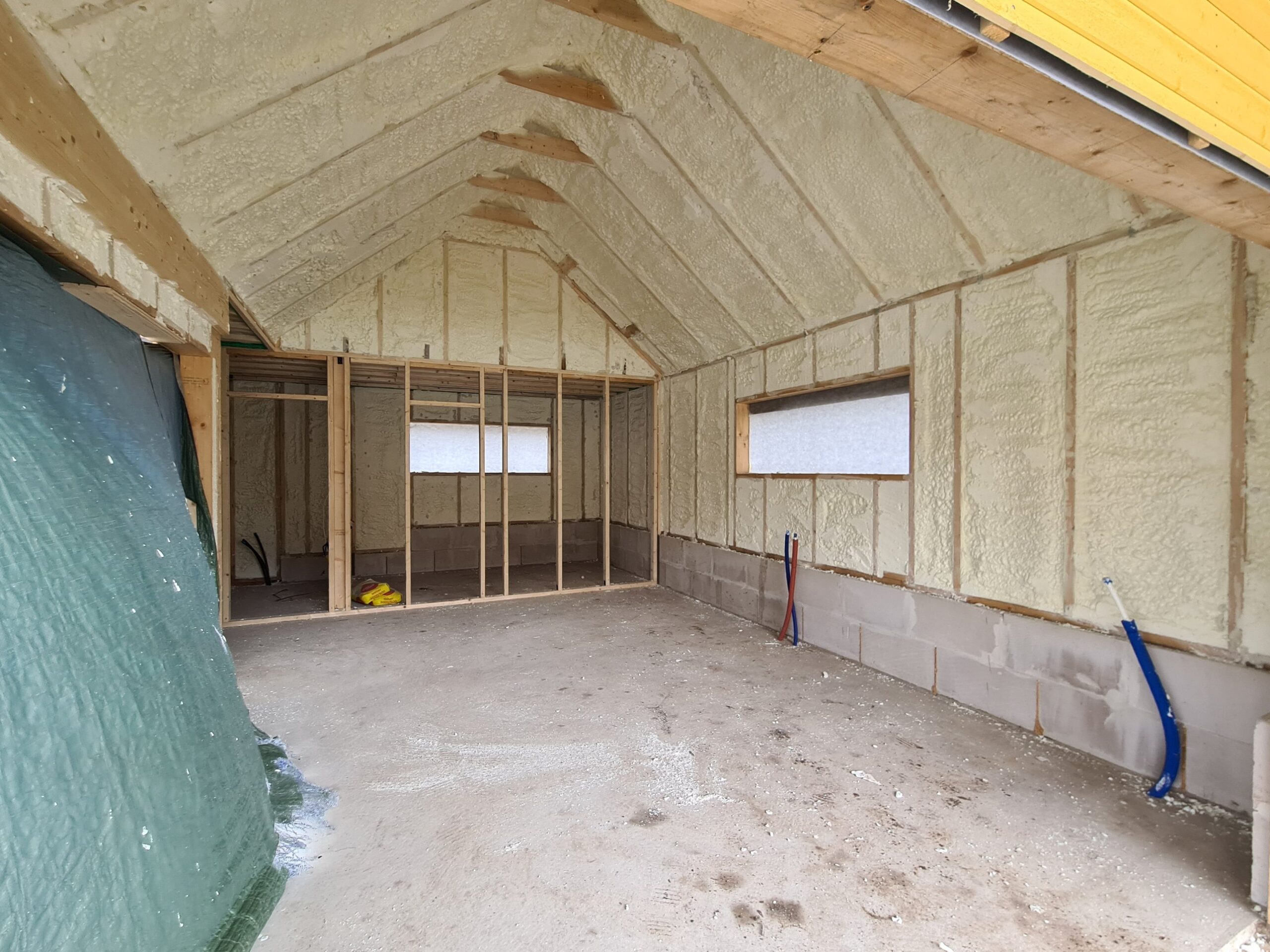
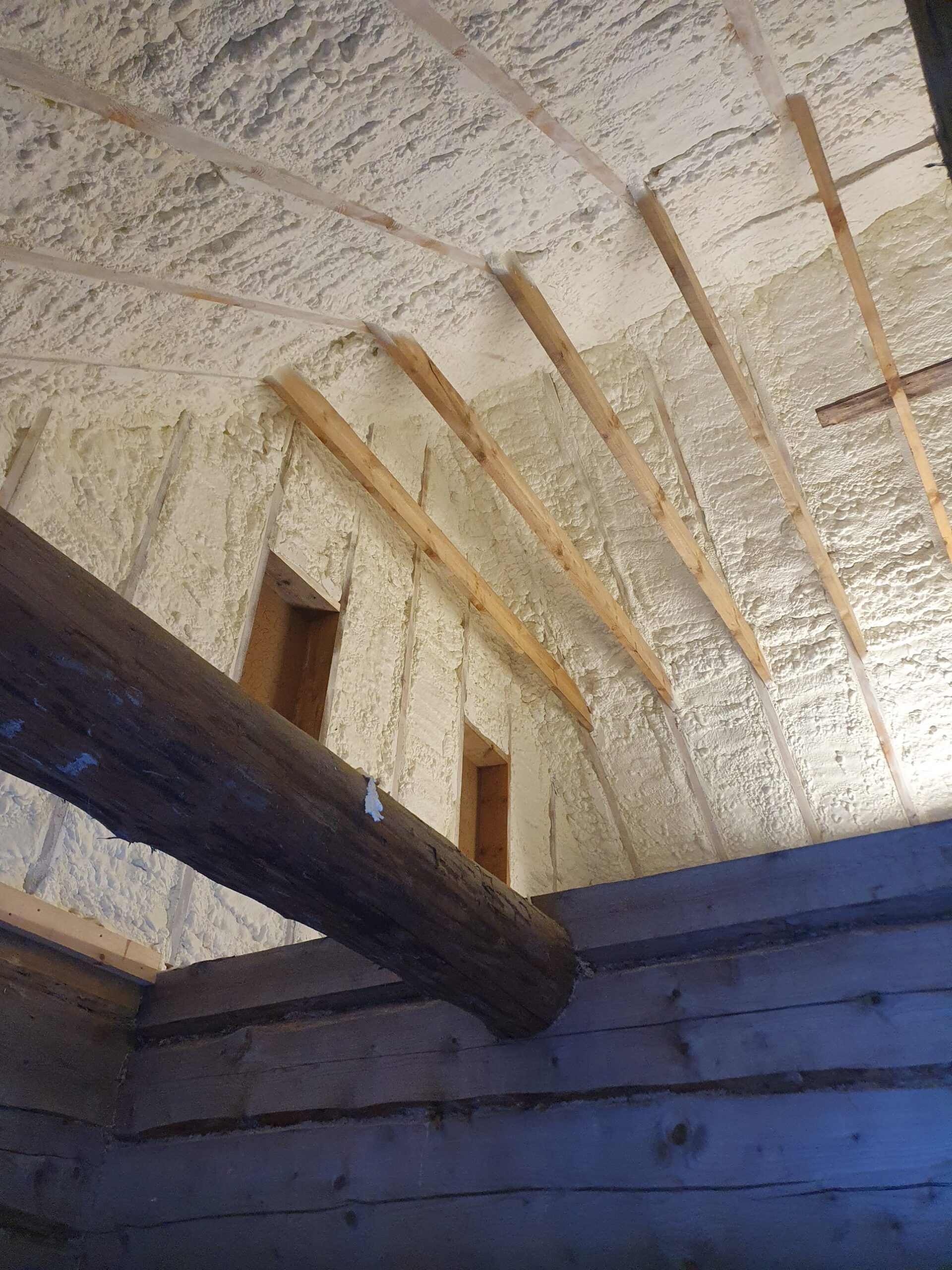
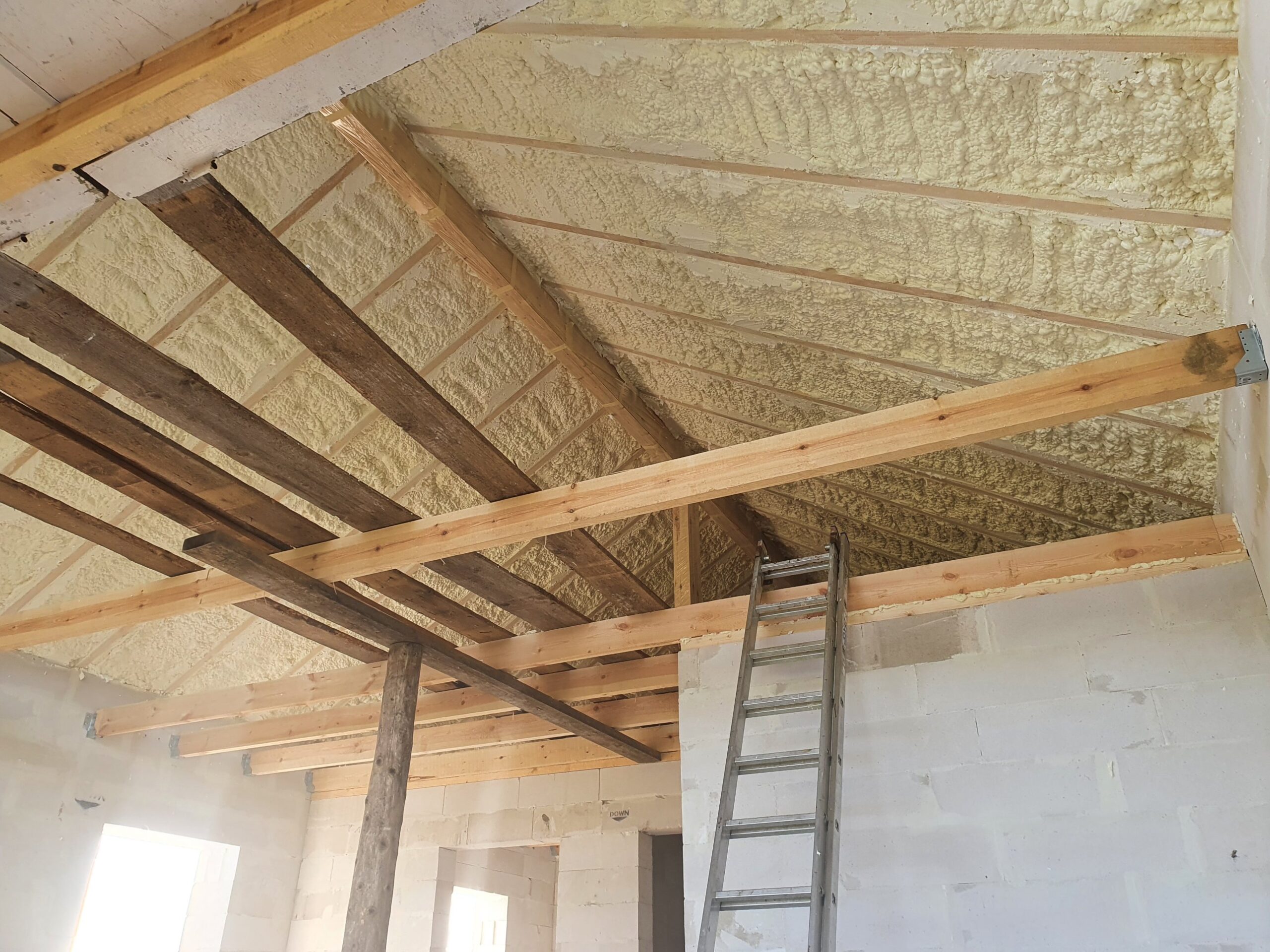
Most often we insulate sloped ceilings, i.e. the spaces between rafters. We spray the foam directly under the underlay or battens between the rafters. The foam adheres to wood, the underlay and boards, and also fills uneven gaps that are difficult to fill properly with mineral wool.
Roof ventilation depends on the existing roof construction. We will inspect it on site and provide a recommendation on what needs to be done if necessary before insulation and which layer build-up is suitable afterwards.
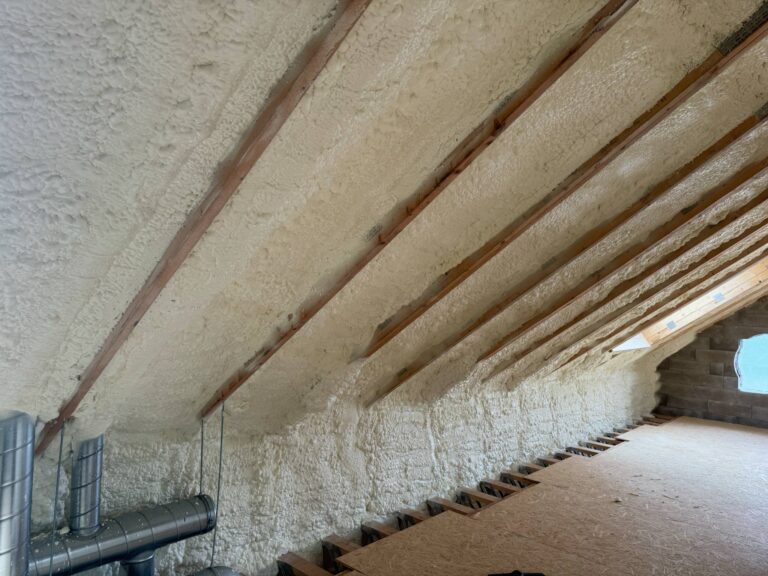
External roof insulation
When the interior decoration is finished and a roof replacement is coming up, the insulation can be replaced from the outside. After removing the old roofing and insulation, we spray the foam between the rafters from the outside, without touching the interior decoration. That way, the roof gets new insulation at the same time as the new roof covering, and nothing in the rooms needs to be dismantled.
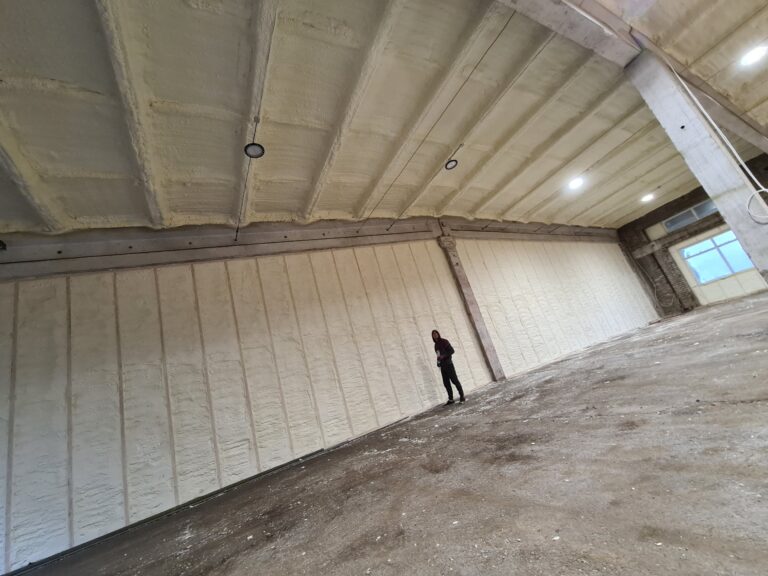
For residential houses, we mostly use open-cell foam. We insulate the roofs of industrial buildings from the outside mostly with closed-cell foam.
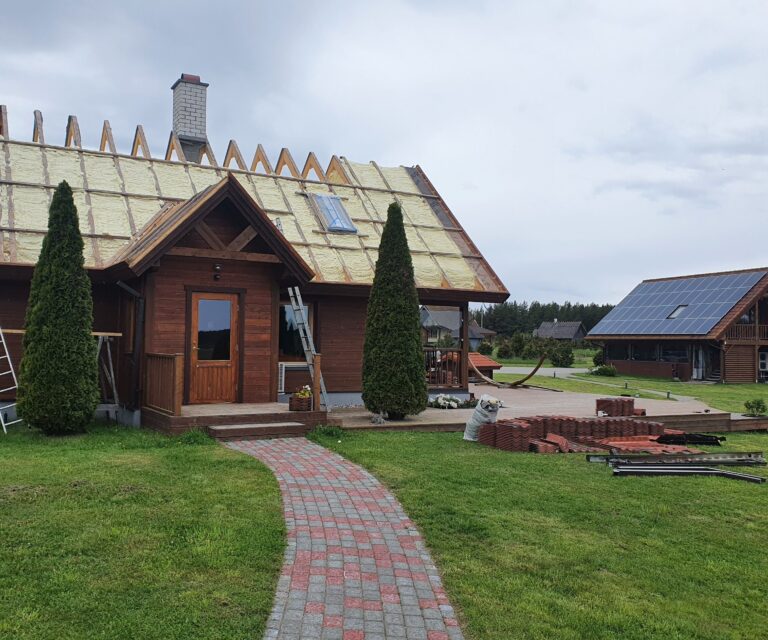
Attic and ceiling insulation
In a house with a cold loft, we insulate the loft floor, which is the ceiling of the lower storey, between the joists. We spray the foam from top to bottom; for this, there must be a base beneath the joists, such as boarding, wind-barrier board or a similar surface. The foam fills the spaces between the joists evenly and seals air leaks through the ceiling.
Insulating under the roof: sloped ceiling or attic floor
If the roof space is a heated room or you plan to use it, we insulate the roof structure between the rafters. If the attic is to remain unheated, we insulate the attic floor between the joists. That way, the cold air stays in the attic and the heat stays in the rooms.
Why PUR foam, not wool
- An even layer without gaps. The foam also fills corners, penetrations and uneven rafter gaps.
- Airtight. Warm air does not leak through the ceiling and the wind does not blow through the insulation.
- Does not sag. The foam stays in place and does not sag downwards over the years.
- Fast. We insulate up to 500 m² in one day. One working day with PUR foam replaces an average of two weeks of wool installation.
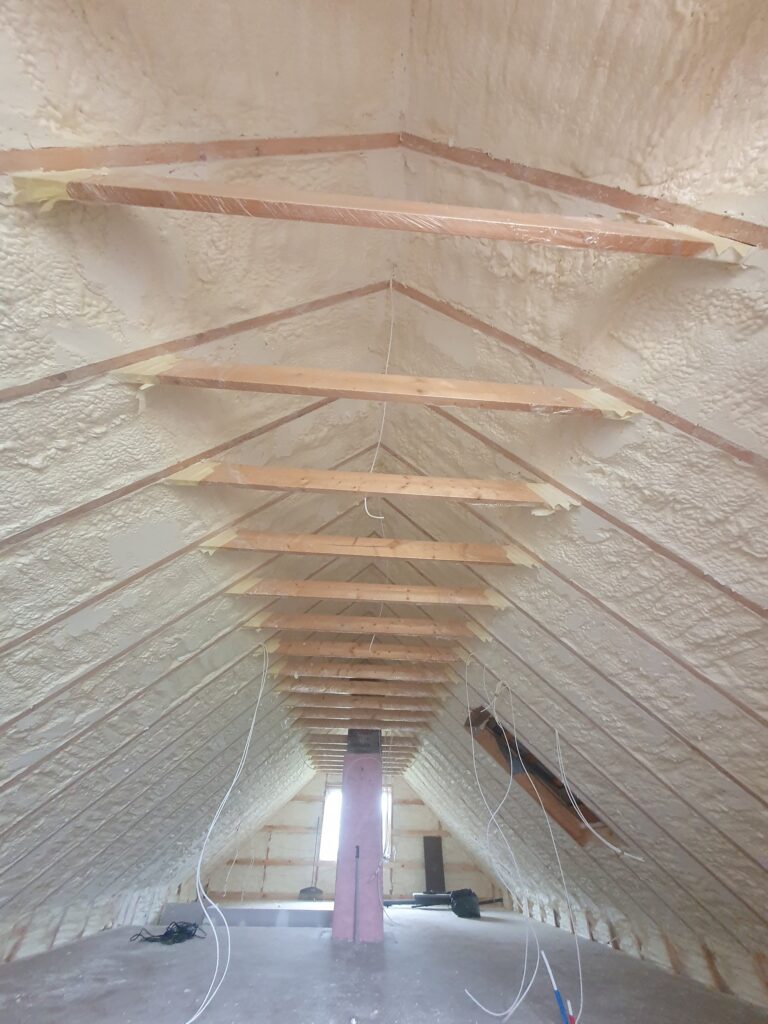
What foam and how thick a layer
The average thickness of roof and attic insulation is between 200 and 300 mm. In residential buildings we use Huntsman open-cell foams H2Foam Lite+ and H2Foam Lite V24, choosing the suitable product according to layer thickness. On industrial building roofs we mostly use closed-cell foam Heatlok Shield.
Pitched roof and flat roof
If the roof is insulated only with PUR foam, without PIR boards, we recommend a layer of 200 to 250 mm for a pitched roof and 250 to 300 mm for a flat roof.
Price
The price depends on the area, layer thickness and access. We calculate based on the actual material consumption.
Send us the area and layer thickness and we will put together a personal quote for you. If the thickness is not known, we will recommend a suitable one. See also PUR foam price.
How the work is done
We install open-cell foam even in winter, outdoors at temperatures down to −15 °C. We install closed-cell foam at temperatures down to −5 °C.
Warranty and quality
We use Huntsman Building Solutions materials. The material and installation come with a 25-year manufacturer's warranty from Huntsman. Once the work is completed, we register the warranty and Huntsman sends a written certificate to the client. We are an official licensed installer of Huntsman and the first importer in Estonia. Since 2013, we have been installing Huntsman PUR foams exclusively.
Completed projects
All images →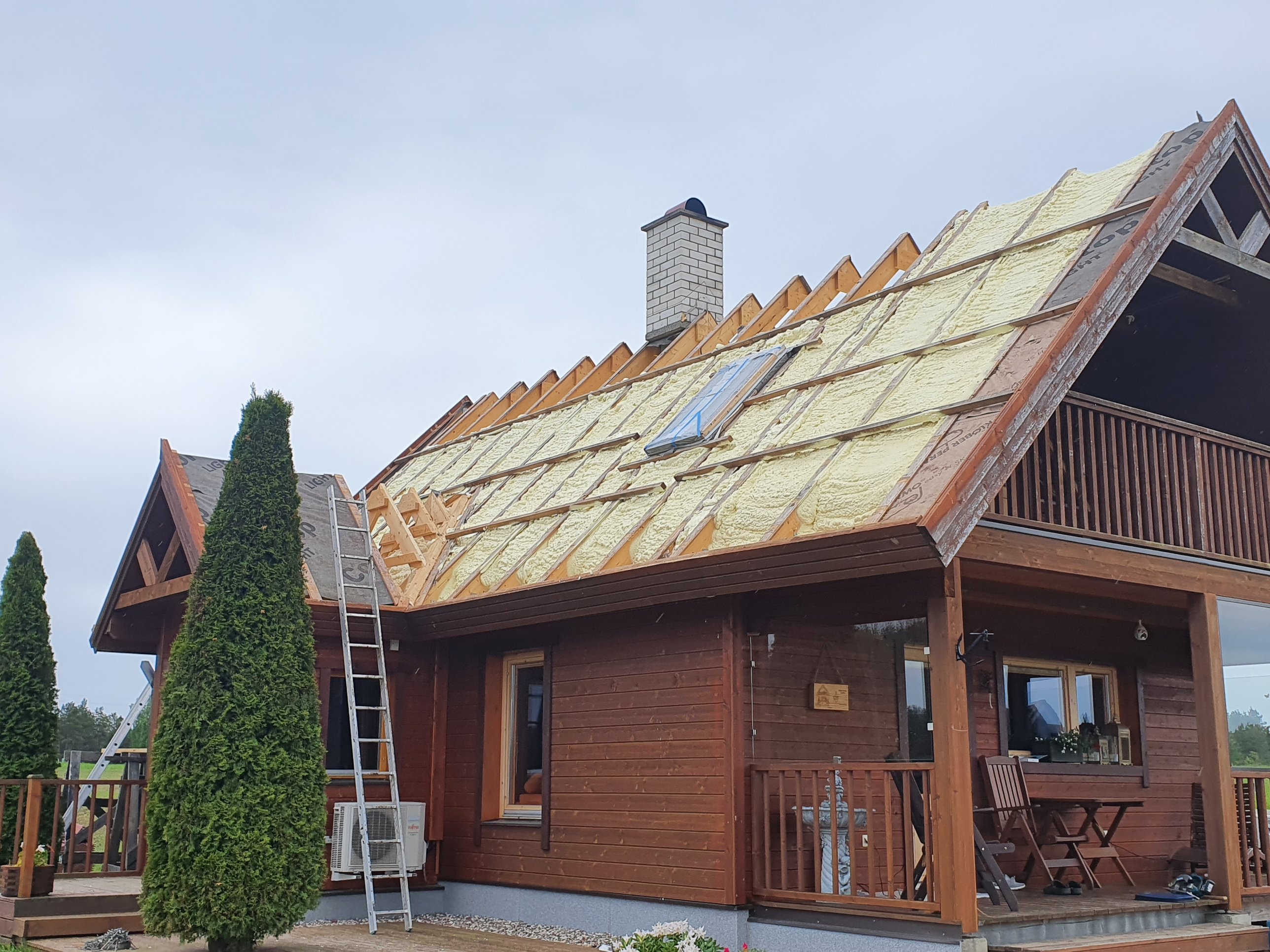
Frequently asked questions
Is a vapour barrier necessary when insulating a sloped ceiling?
It depends on the construction and use of the rooms. We will review the layers on site and provide a recommendation. Read more: Is a vapour barrier needed for PUR foam?
Who removes the old insulation?
The old insulation is to be removed by the client, unless otherwise agreed.
Can the roof be insulated without damaging the interior finish?
Yes. When the roof covering is replaced, the insulation can be replaced from the outside.
Can work be done in winter?
Yes. Open-cell foam can be installed outdoors at temperatures down to −15 °C, and closed-cell foam down to −5 °C.
When can the rooms be used after insulation?
After 12 hours of airing.
Can the attic floor also be insulated from below?
Usually we insulate the loft floor from above. To do this, there must be a base beneath the joists onto which the foam can be sprayed.